
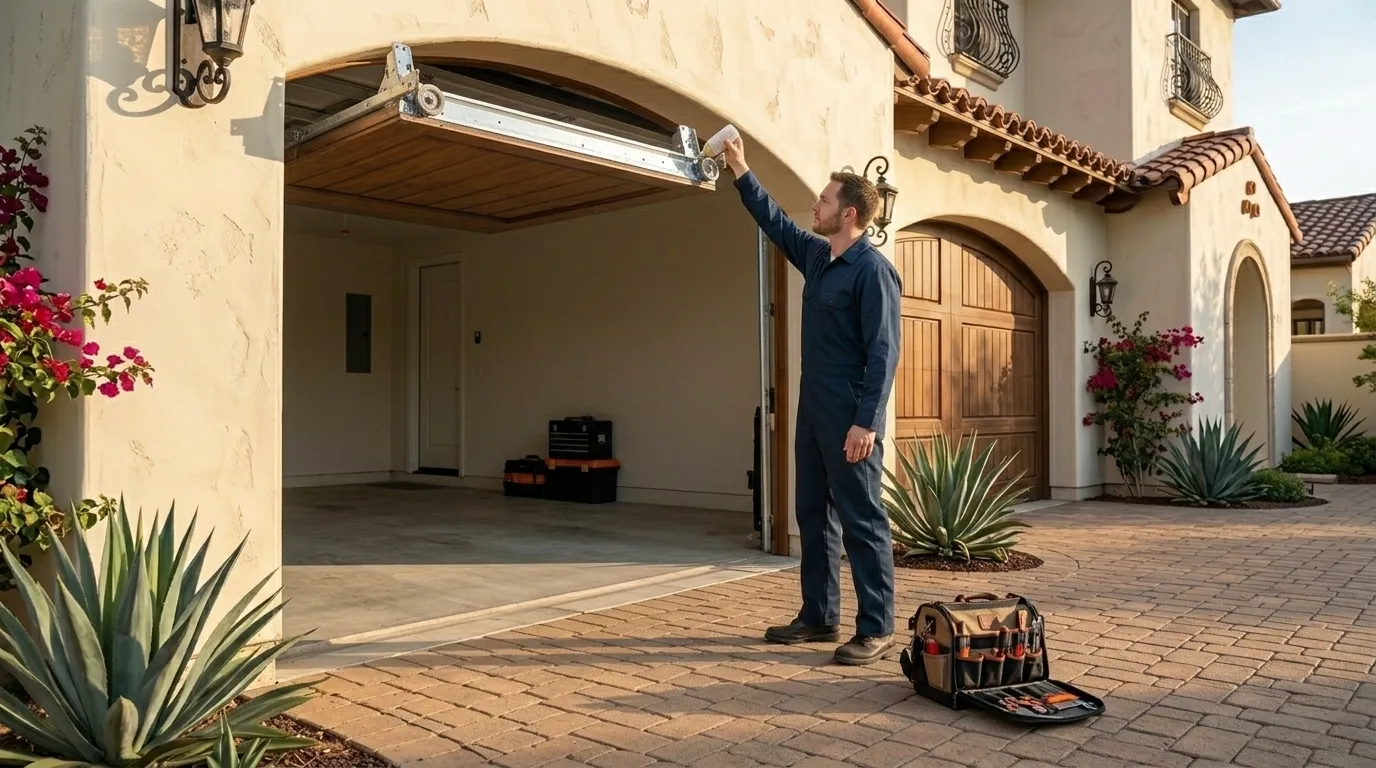
Off-Track Repair in Cedar Grove
Off-Track Garage Doors on Cedar Grove's 1958-Era Homes
Cedar Grove homes date to about 1958, and their original steel or wood doors ride on hardware that wasn't built for decades of New Jersey winters. Here's what off-track looks like on these doors.
- Licensed & Insured
- Same-Area Service Calls
- Upfront Pricing
What Happens When You Call
-
1
Call or Request a Quote
Tell us what the door is doing and roughly how old the house is - that alone points us toward the likely part before a truck leaves.
-
2
On-Site Diagnosis
A tech checks the spring, cables, tracks, and opener in person and tells you plainly what is actually wrong.
-
3
Straight Price, No Surprises
You get a number before any work starts. It covers parts and labor, nothing added after the fact.
-
4
Fixed the Same Visit
Most repairs are done in one trip. If a part needs sourcing, we tell you that upfront instead of guessing.
The Symptom
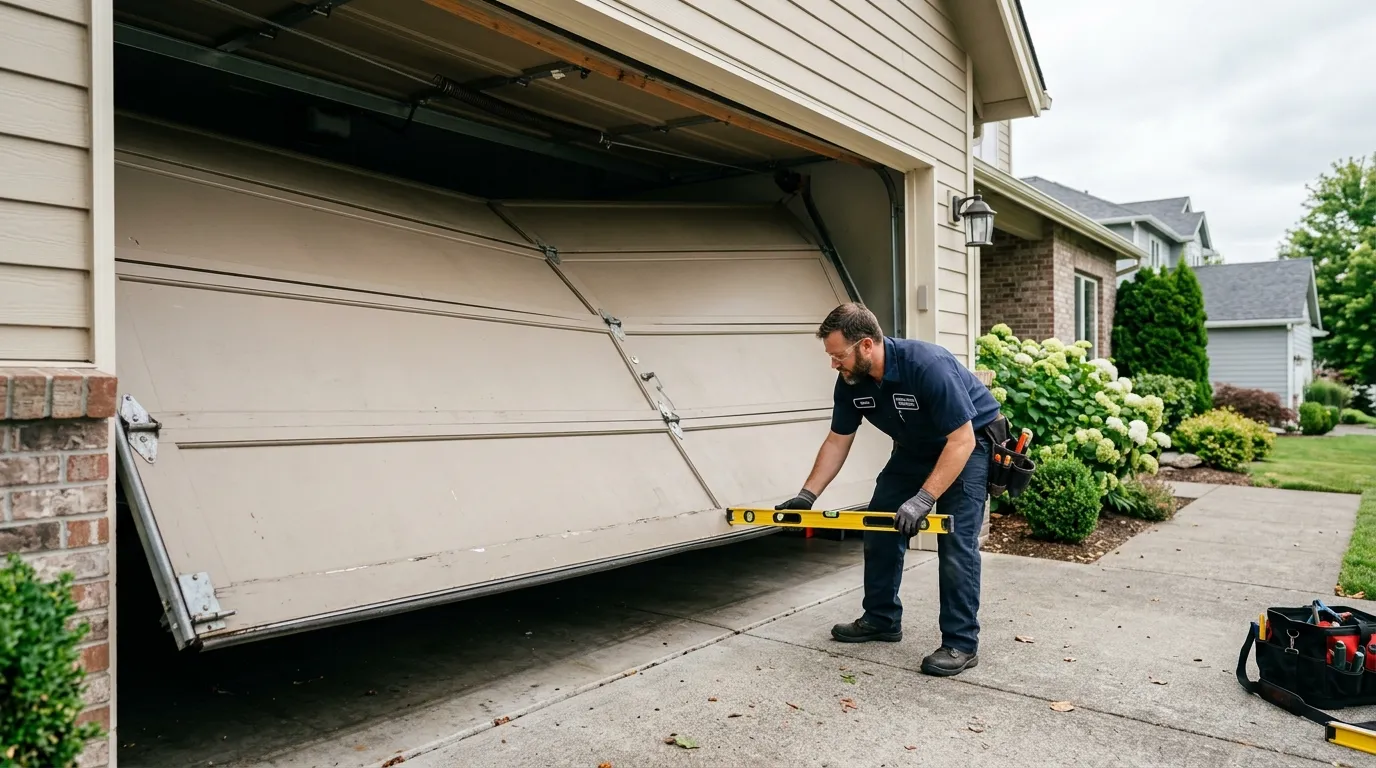
Most garages in Cedar Grove went up around 1958, and the doors that came with them were built to a different standard than what you'd buy today. A lot of these are still single-layer steel or old wood panel doors, sized for the narrower two-car bays that were standard for the era - not the wider, heavier sectional doors you see in newer construction. When a door like this comes off track, it usually announces itself the same way: the door binds a few inches up, one side hangs lower than the other, or it stops dead and the opener strains against it.
On these older doors, the rollers are frequently the original steel type, not nylon, and once they jump the track groove they tend to bend the track lip on the way out rather than just popping loose. That's a different repair than a modern door with plastic rollers and a wider track channel. If your door is original to a 1958 build, assume the track and roller setup is original too, and that changes what a repair actually involves.
Why It Happens Here
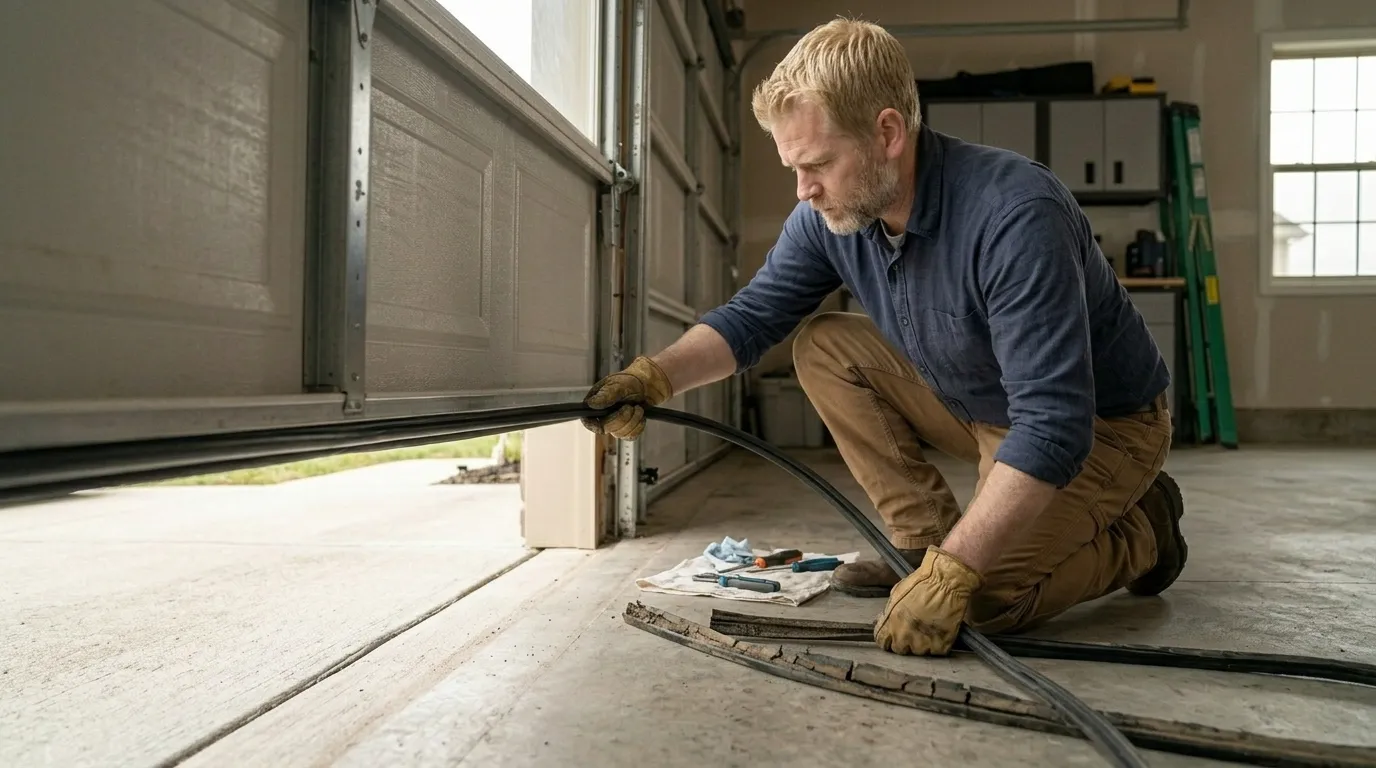
Cold is the main driver. The region sits in a severe cold climate band, and steel track brackets contract in winter just enough to loosen the lag screws holding them to the jamb. On a door that's been through close to seventy winters of that cycle, the wood jamb behind the bracket has often loosened too, so the track shifts a little more each cold snap.
Add a broken cable or a spring that's lost tension - common on doors this old - and the door comes off the track unevenly, with one side dropping faster than the other. We also see it after someone backs into a closed door or a low-tension spring lets the door slam the last foot of travel. On original hardware, there's less give in the system to absorb that kind of shock, so the track takes the hit instead of the door absorbing it.
The Complications
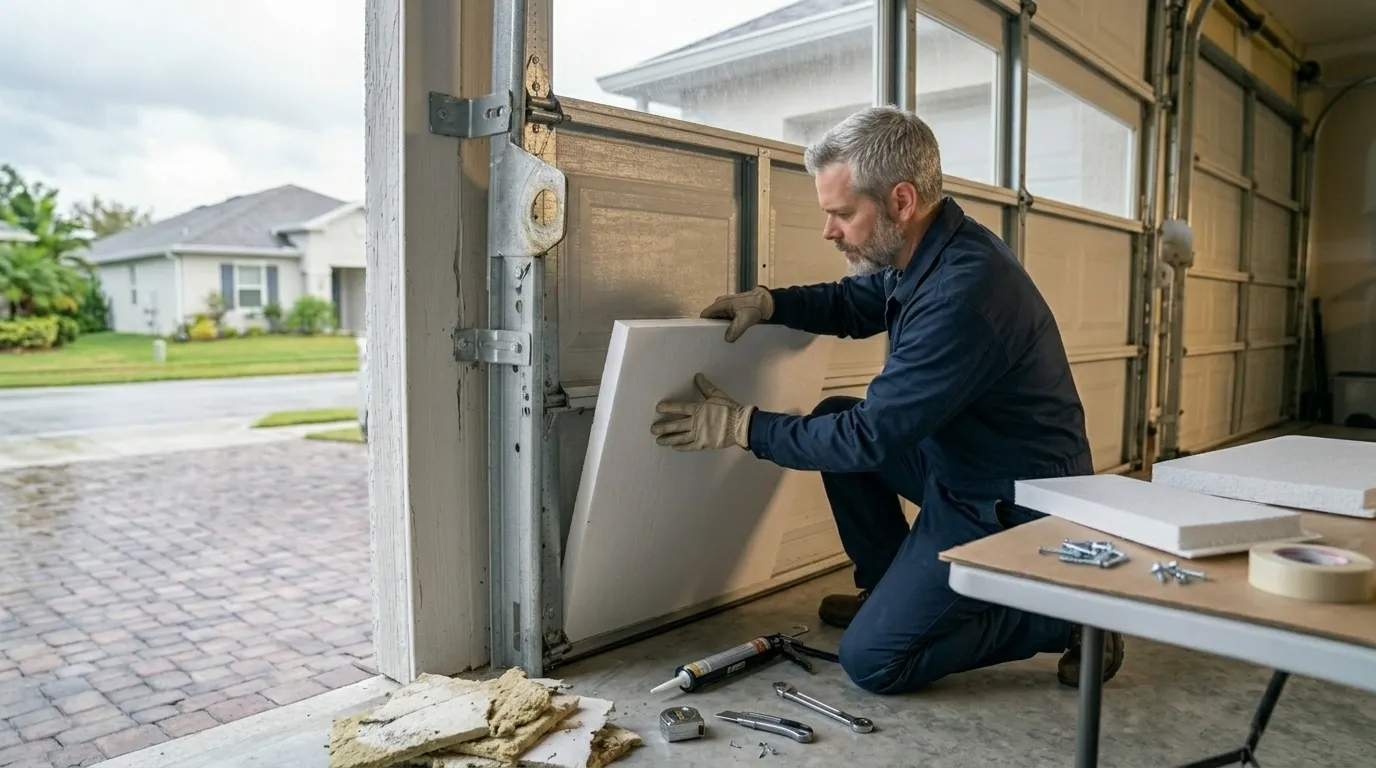
An off-track door on a house this age usually isn't a standalone problem. If the track bracket has pulled loose from a softened jamb, tightening the screws back into the same holes doesn't hold - the wood needs a different fix, sometimes just relocating the bracket a couple inches over to solid material.
If the door is the original steel or wood panel unit, replacement parts for that specific roller and track profile aren't something every supplier stocks off the shelf, so a straight swap can take longer to source than it would on a newer door. And if the spring let go at the same time the door went off track, you're not looking at one job, you're looking at two, and they need to happen in the right order - spring first, or the door isn't safe to move at all.
What the Repair Takes
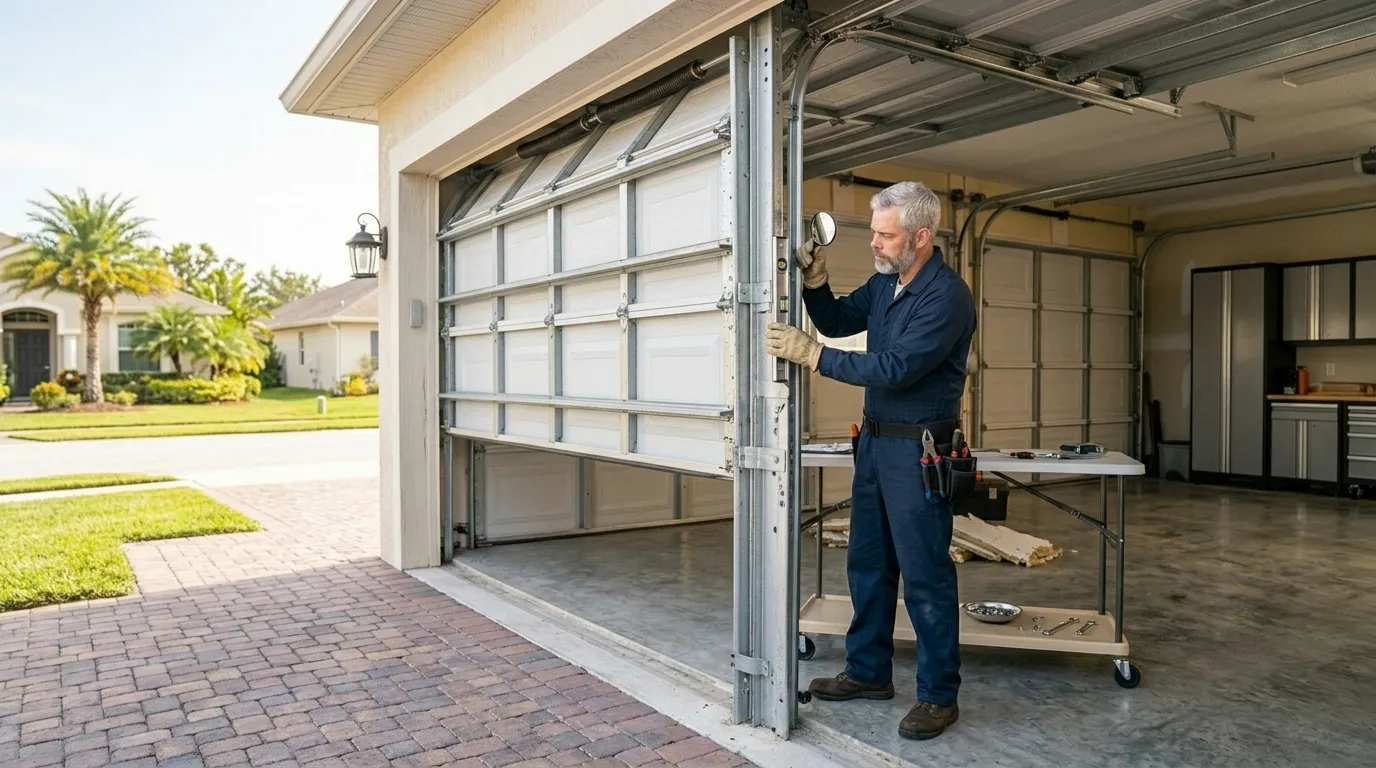
First step is getting the door safely off the opener and supported so nobody's hands are near a loaded cable or spring. Then it's a matter of checking whether the track itself bent when it came off the roller - if it did, that section gets replaced rather than bent back, because a straightened track rarely runs true again. Brackets get reset into solid jamb material, not just re-driven into the same worn holes.
Rollers get inspected too; on a door this old, if one roller failed, the others on that side are usually close behind and worth replacing at the same time rather than making a second trip. Once the door's back on track, it gets run through a full open-close cycle to make sure it's tracking even and the opener isn't fighting it.
The DIY Question
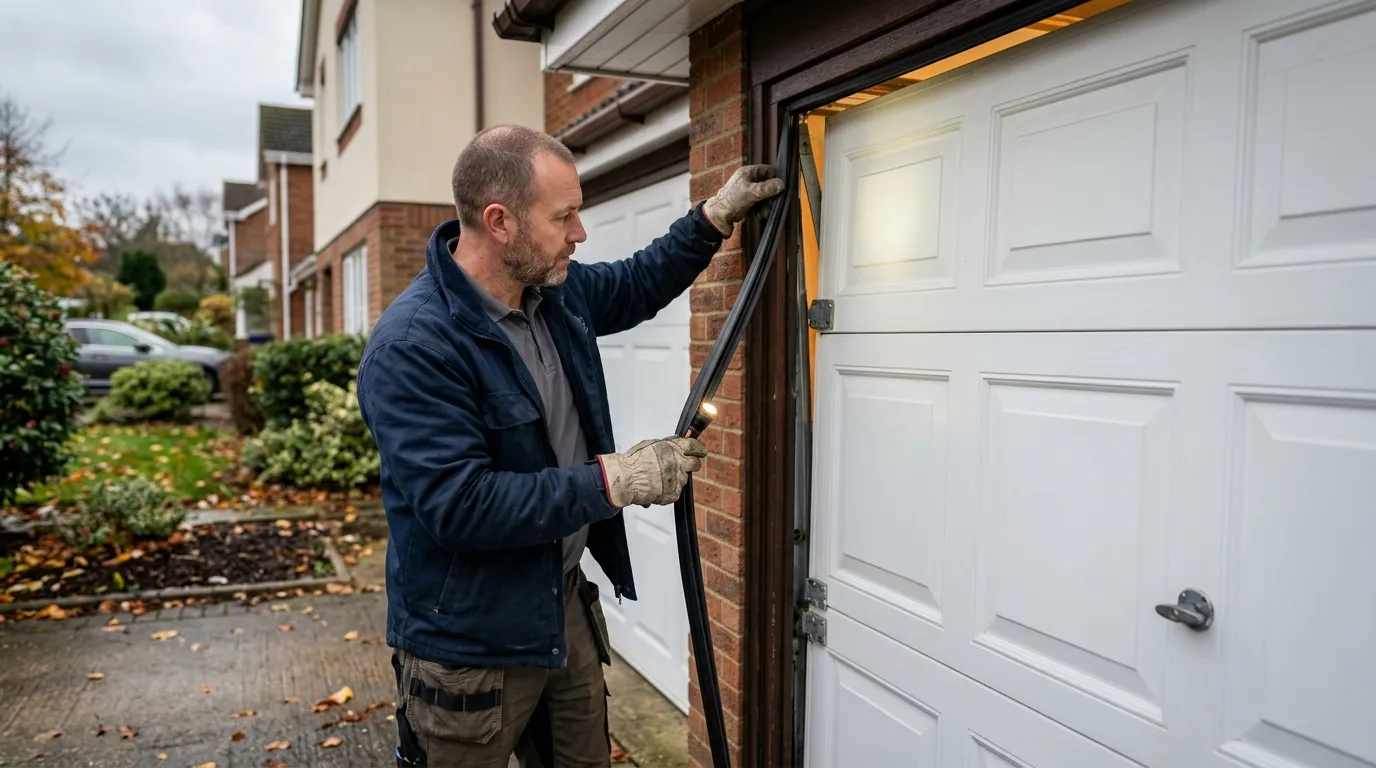
An off-track door under any spring tension is not a safe DIY fix - the cable or spring can let go while you're working near it, and on an older door with original hardware you often can't tell how much tension is actually stored until it's already moving. If the door is off its track but the opener is disconnected and the door is resting on the ground with no tension on the cables, a homeowner can sometimes lift it back onto the track alone.
But on a original 1958 door, there's a decent chance the track itself is bent or the bracket is loose in the jamb, and forcing the door back on without fixing that just sets up the same failure again in a few weeks. If you're not sure which situation you've got, that's the call to make before touching it.
What Is on the Truck
The truck coming from Wayne, five miles out, carries track sections and roller types that fit older steel and wood panel doors, not just the current sectional door hardware most supply houses stock as standard. That matters here because a fair number of Cedar Grove garages still run something close to their original door. What isn't on the truck is a full replacement door in every size and style - if the original unit is far enough gone that repair doesn't make sense anymore, that's a separate conversation and a separate visit to measure and order the right size for that opening.
Talk to a Cedar Grove Technician First
Describe what the door is doing and get a straight answer on what it likely needs.
Other Garage Door Services in Cedar Grove
Recent Work in Cedar Grove
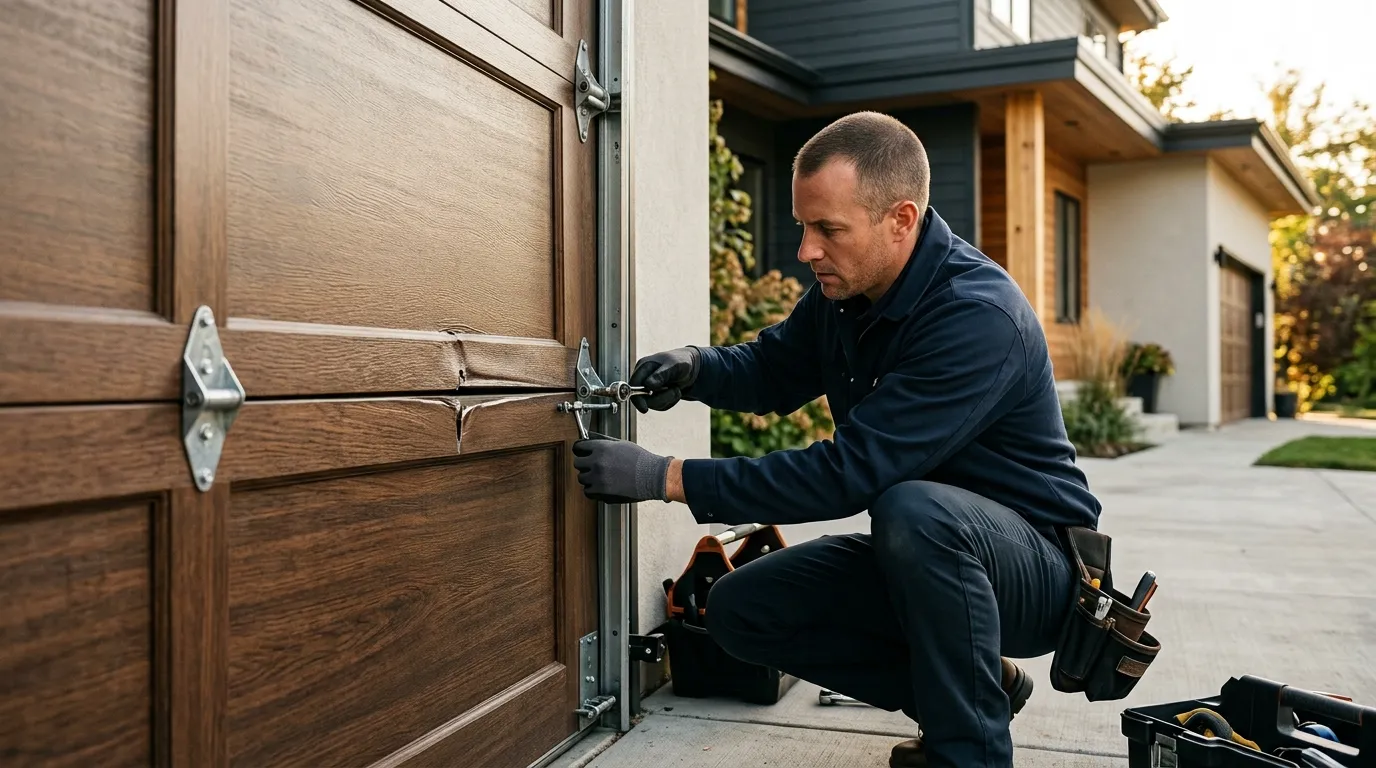
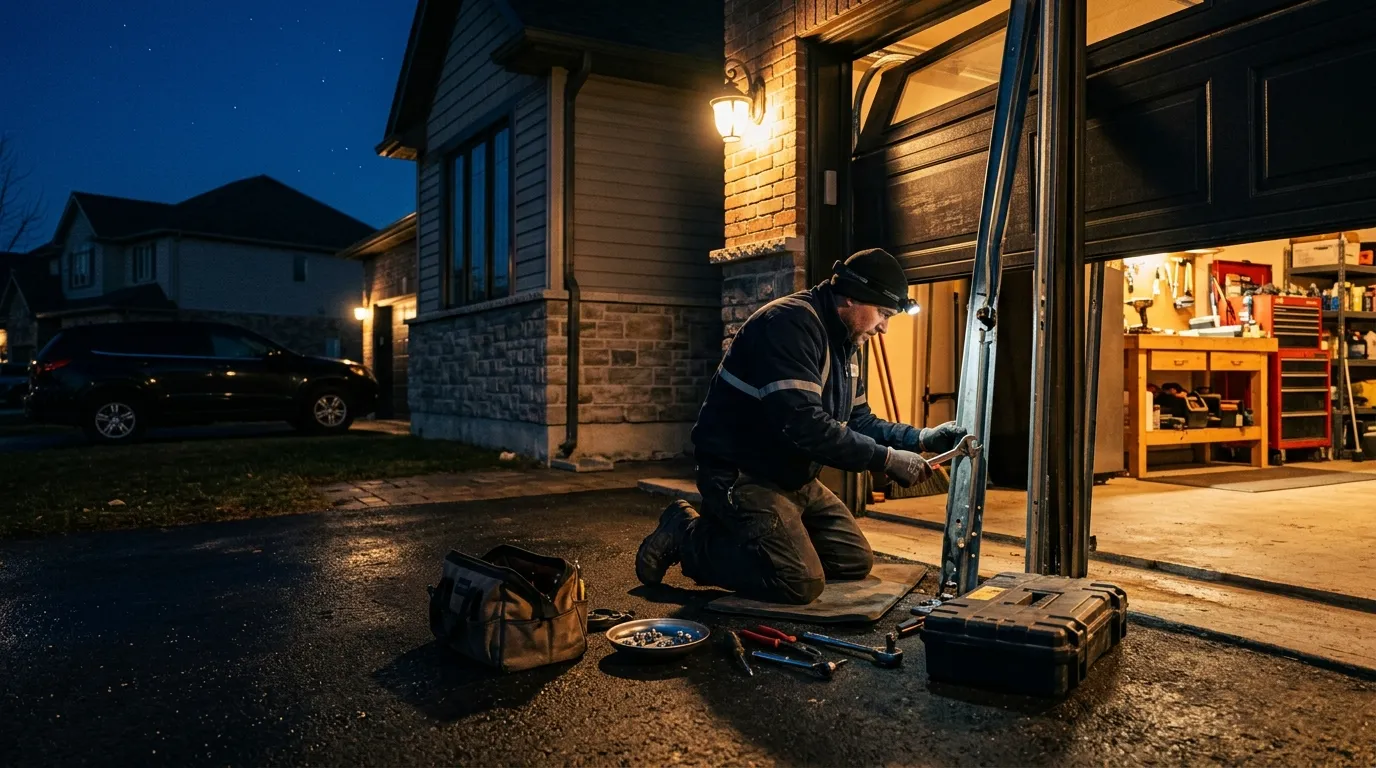
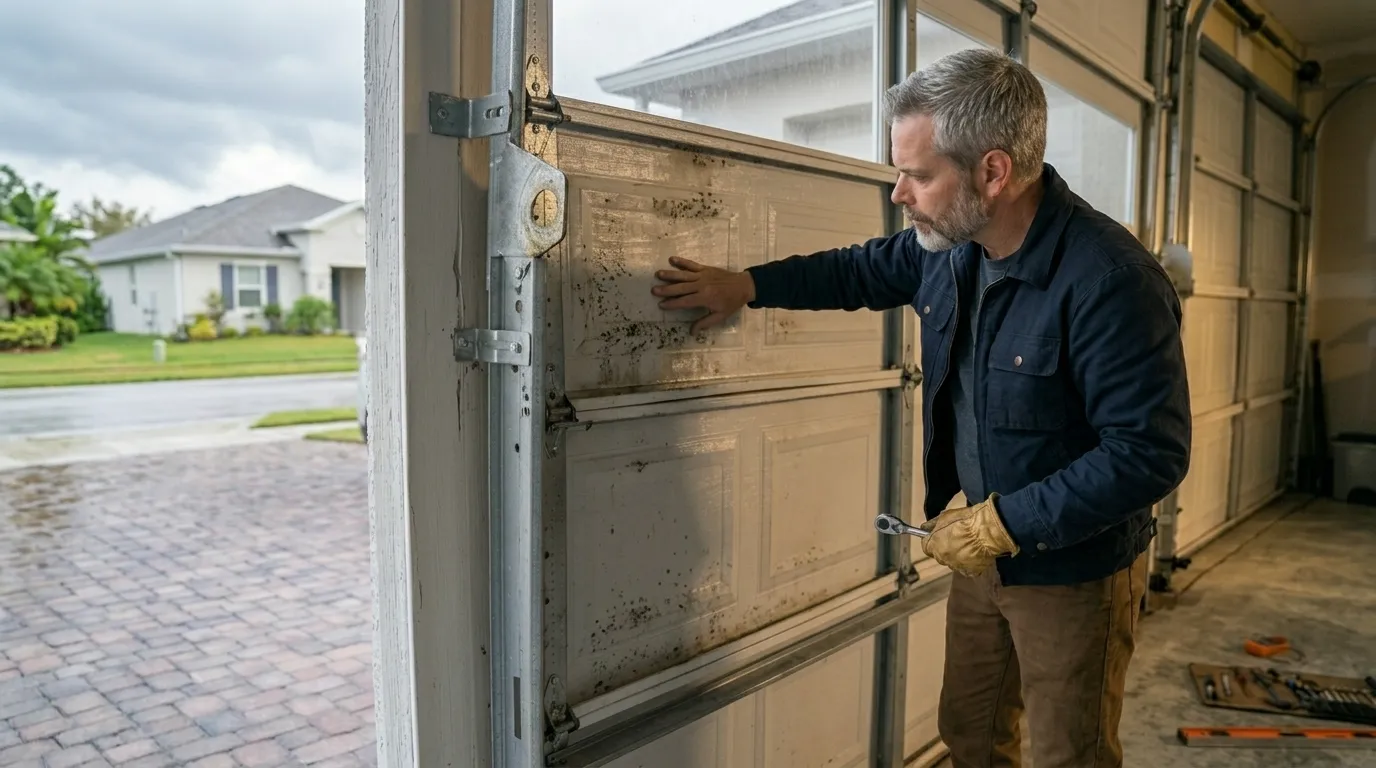
A look at jobs our crew has been on nearby.
Why Cedar Grove Calls Us
Frequently Asked Questions
Why did my garage door come off the track with no warning?
On a door built around the 1958 era common in Cedar Grove, the track bracket often loosens gradually as the wood jamb behind it shrinks over decades of temperature swings. The door can run fine for months and then jump the track the first time a cold snap hits, because that's when the bracket finally lets go.
Can you fix the original 1958 track instead of replacing it?
If the track section itself isn't bent, yes - often it's the bracket and jamb that failed, not the track, and resetting the bracket into solid wood is enough. If the track bent when the roller jumped out, that section needs replacing rather than straightening, since a bent track rarely runs true again.
How fast can someone get out from Wayne?
We travel to Cedar Grove from Wayne, about five miles away, for this kind of repair. We don't have a branch in Cedar Grove itself, so every visit comes from the Wayne shop.
Is it worth repairing an original door instead of replacing it?
Depends on the door. If the panels and frame are sound and it's just track, bracket, or roller trouble, repair usually makes sense. If the steel is rusted through or the wood panels are warped, you're better off putting that money toward a new door instead of chasing repairs on one that's failing in multiple places.
Need Off-Track Repair in Cedar Grove?
Call now for straight answers on cost and timing.