
Service
Garage Door Cable Repair for Wayne Homes
Broken or frayed garage door cables in Wayne's pre-1960 housing stock, explained: why cold-climate wear hits these older openers hard and what a cable repair actually involves.
- Licensed & Insured
- Same-Area Service Calls
- Upfront Pricing
What Happens When You Call
-
1
Call or Request a Quote
Tell us what the door is doing and roughly how old the house is - that alone points us toward the likely part before a truck leaves.
-
2
On-Site Diagnosis
A tech checks the spring, cables, tracks, and opener in person and tells you plainly what is actually wrong.
-
3
Straight Price, No Surprises
You get a number before any work starts. It covers parts and labor, nothing added after the fact.
-
4
Fixed the Same Visit
Most repairs are done in one trip. If a part needs sourcing, we tell you that upfront instead of guessing.
The Complications
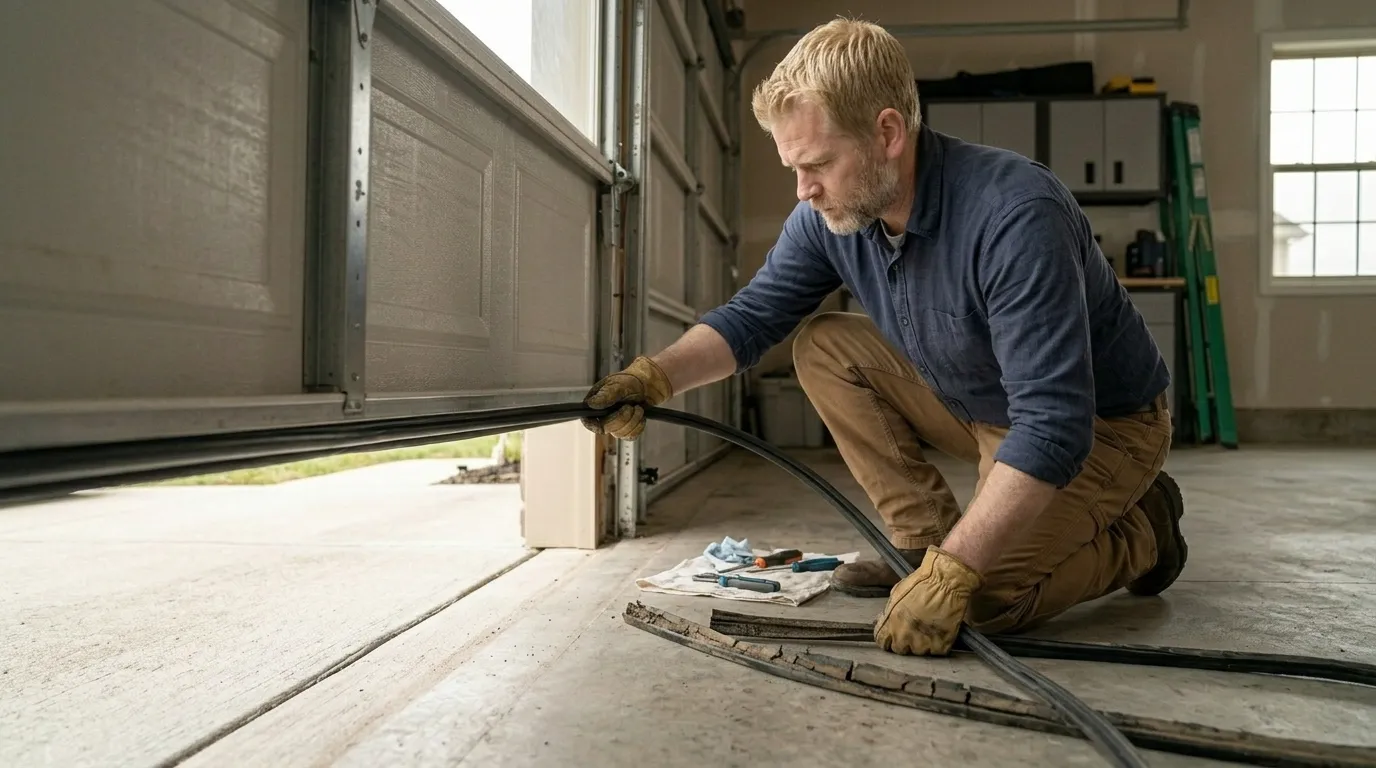
A snapped cable rarely travels alone. On a lot of the doors we see in this area, the cable has been sharing a drum or a pulley with hardware that's decades old, and once one cable goes, the drum, the other cable, or the bottom bracket often needs a look too.
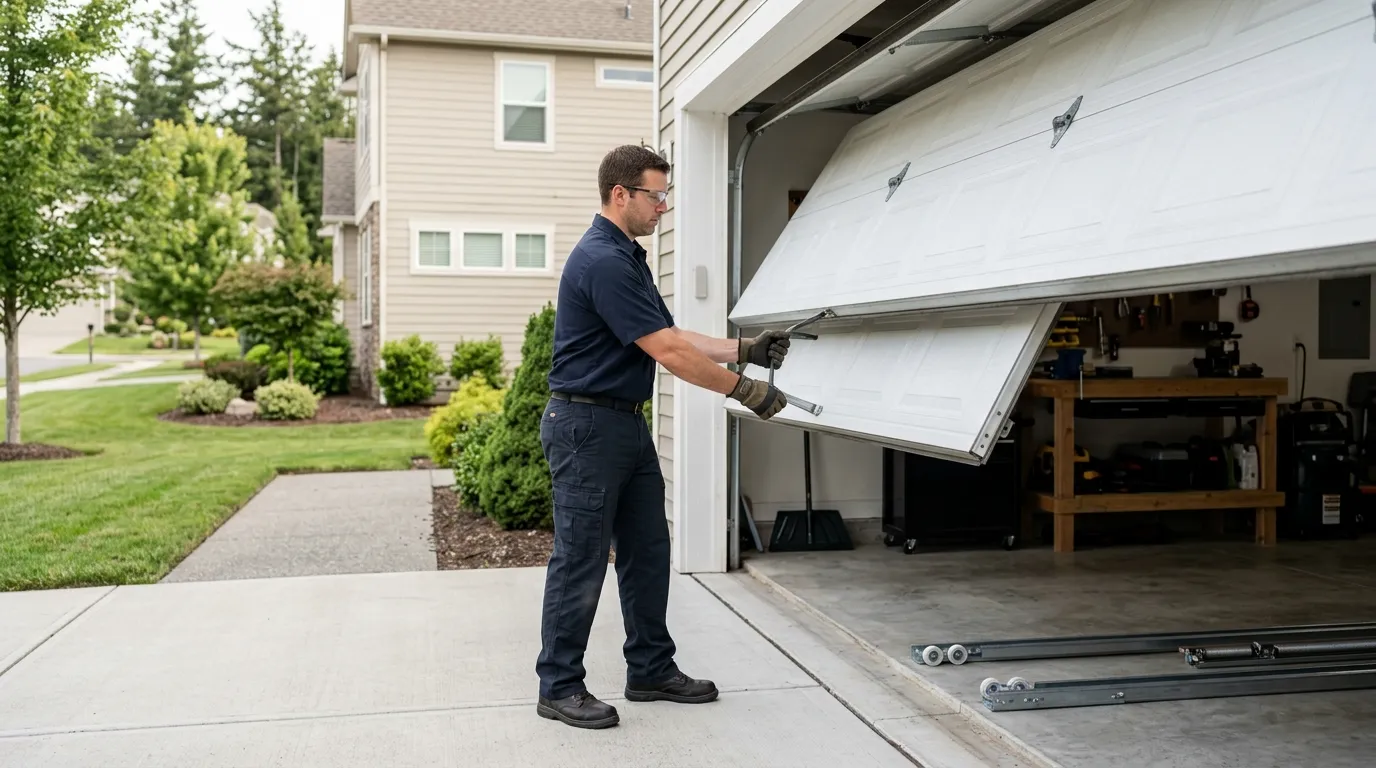
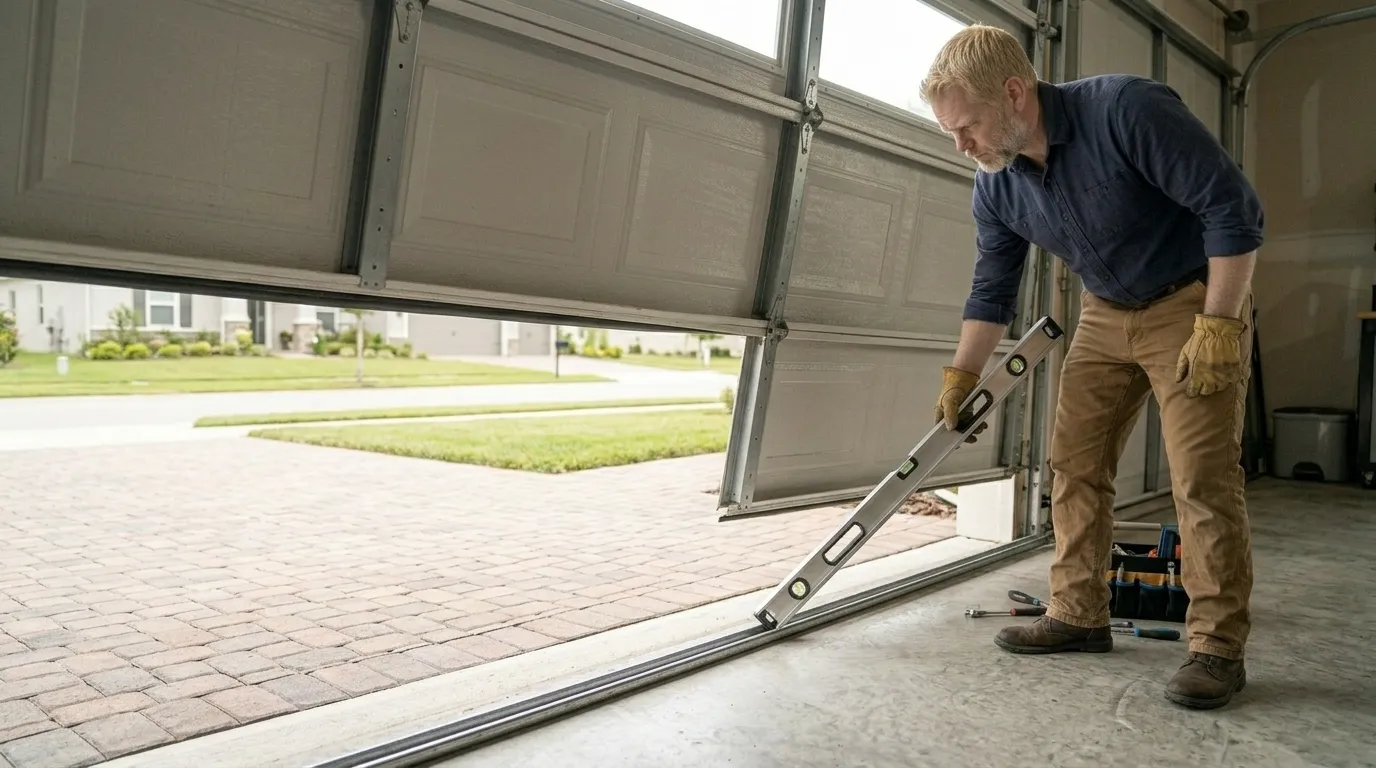
If your door dropped hard on one side and is sitting crooked in the track, that's the cable on that side letting go while the other one is still holding. Don't try to force the door up or down when this happens - with one cable gone, the door is unbalanced and the remaining cable and spring are carrying weight they weren't built to carry alone, and the track can bend fast.
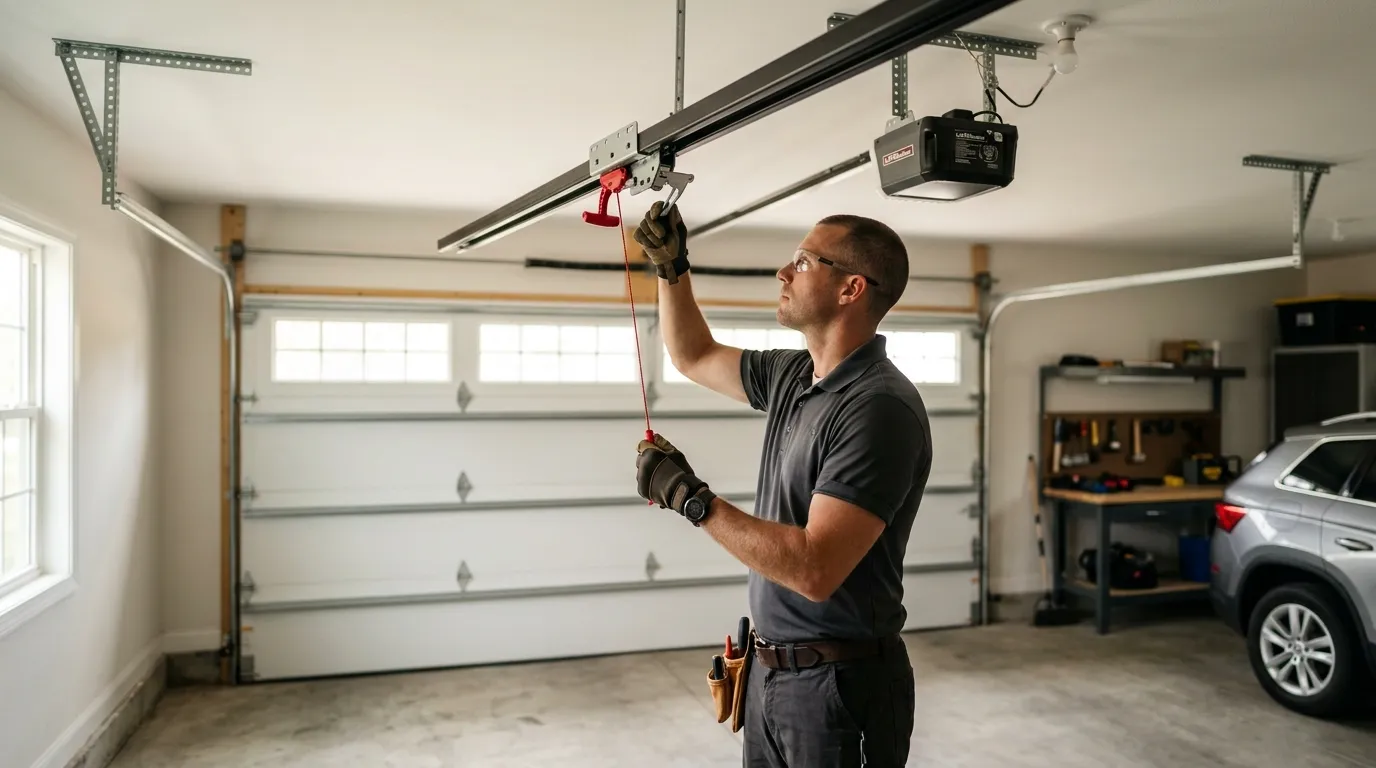
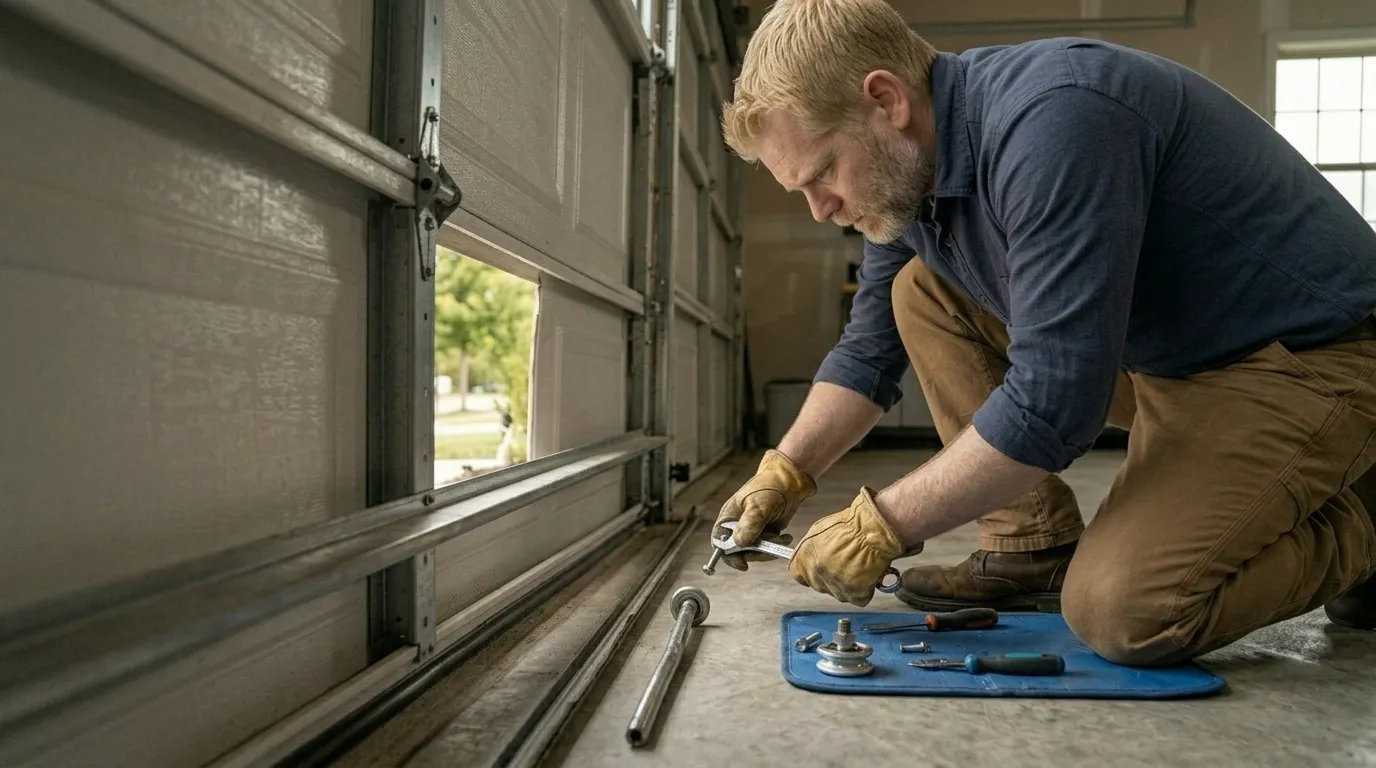
On older torsion setups, common in homes from the 1938-1996 building window, the cable drum and the cable itself are often original or close to it, which means the fix isn't always a like-for-like swap - sometimes the drum or shaft has to come out too. We won't sell you a new cable and send you on your way if the drum is worn through; that's a repair that comes back in six months, and it's not worth doing halfway. If the opener has been forcing itself against a jammed cable for a while, check the opener's gears too - that's a separate conversation, but it's often connected.
Why It Happens Here
Most of the housing across this service area was built between 1938 and 1996, with a median year around 1959, and that pattern holds across the roughly 152 named areas we work in - this isn't a Wayne-only quirk, it's the whole corridor. Original torsion hardware from that era used cable and drum combinations that were standard then but aren't stocked the same way now, so a lot of the cable failures we see are hardware that's simply lived out its life, not damage from a single event.
The climate band here is classified cold and severe, and that matters for cable specifically: galvanized cable stretches and corrodes faster with repeated freeze-thaw cycling than it would in a milder climate, and the strand starts fraying at the point where it wraps the drum. On a lot of these older doors, that fraying happens where you can't see it without pulling the cable off the drum, which is why a cable that looks fine in October can snap in January. Combine 60-plus-year-old drum hardware with a cold winter and you get exactly the failure pattern we get called out for most: one side drops, the door racks in the track, and the opener keeps trying to lift a door that's no longer balanced.
The Cost of This Job
We don't have a flat number to give you here, because what drives the cost on a cable job is what's underneath it - a straight cable swap on newer hardware is a different job from a cable-and-drum replacement on original torsion hardware from the 1950s or 60s. What we can tell you is what changes the bill: whether one cable failed or both, whether the drum or shaft is worn or bent, whether the bottom bracket or track took damage when the door dropped, and whether the opener's gears got stressed while it kept trying to run.
We'll look at the door, tell you what's actually worn versus what's still good, and give you a number before we touch anything - not after. One honest limitation: if the drums are shot on both sides and the shaft is pitted, replacing cable alone is a patch, not a fix, and we'll say so instead of billing you twice for the same door within a year.
The Symptom
Here's what a failing cable usually looks like before it fully breaks: a visible fray or a few broken strands near where the cable meets the bottom bracket, a door that suddenly feels heavier to the opener, or a faint popping or snapping sound partway through the door's travel. Once it goes fully, one corner of the door drops a few inches lower than the other, the door sits crooked in the tracks, and it either won't move at all or moves in a jerky, uneven way.
If you see loose cable draped or coiled anywhere near the bottom rollers, stop using the door and don't reach for it by hand - a cable under tension that's partially failed can whip when it finally lets go. Call it in and we'll get eyes on it before it does more damage to the track or the opener.
Talk to a Technician Before You Book
Describe what the door is doing and get a straight answer on what it likely needs.
Jobs Like Yours
Recent work from this service line.
Why Wayne Calls Us
Frequently Asked Questions
Why did my garage door cable snap in the middle of winter?
Cold-climate cycling makes galvanized cable stretch and fray faster, especially on original torsion drums from homes built in the mid-20th century, which describes a lot of the housing stock across this area. The strand weakens where it wraps the drum, and a hard freeze is often what finally breaks it.
Can I replace just the cable, or does the drum need to come out too?
Depends on the drum. If it's original hardware from an older torsion system and it's worn or grooved where the cable sits, replacing cable alone is a short-term patch. We check the drum and shaft before quoting, and we'll tell you honestly if a cable-only fix isn't going to hold.
Is it safe to open my garage door manually if a cable broke?
No. With one cable gone, the door is unbalanced and the spring is under uneven load. Forcing it by hand risks the door dropping suddenly or the remaining cable failing too. Leave the door where it is and call for a repair before anyone tries to move it.
How do I know if it's the cable or the spring that failed?
A broken spring usually makes a loud bang and the door won't lift at all, even with the opener. A broken cable often lets the door drop unevenly on one side while the other side stays up, and you may see loose or frayed cable near the bottom bracket.
Need Garage Door Cable Repair for Wayne Homes?
Call now for straight answers on cost and timing.