
Garage Door Service in Cedar Grove
Garage Door Service in Cedar Grove, NJ
Cedar Grove's houses date to 1958, almost the same era as the rest of the territory. We drive in from Wayne, 5 miles out, to work on that original hardware.
- Licensed & Insured
- Same-Area Service Calls
- Upfront Pricing
What Happens When You Call
-
1
Call or Request a Quote
Tell us what the door is doing and roughly how old the house is - that alone points us toward the likely part before a truck leaves.
-
2
On-Site Diagnosis
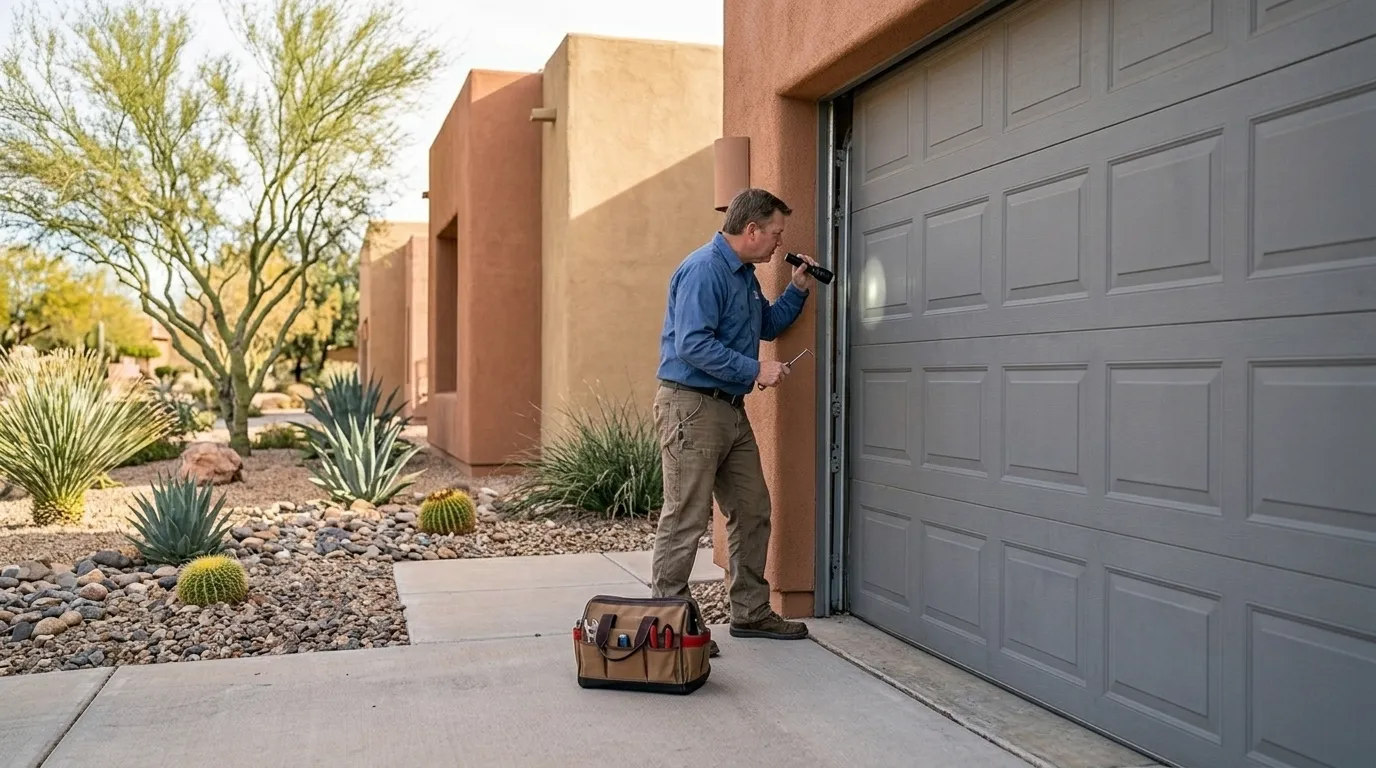
A tech checks the spring, cables, tracks, and opener in person and tells you plainly what is actually wrong.
-
3
Straight Price, No Surprises
You get a number before any work starts. It covers parts and labor, nothing added after the fact.
-
4
Fixed the Same Visit
Most repairs are done in one trip. If a part needs sourcing, we tell you that upfront instead of guessing.
The Symptom
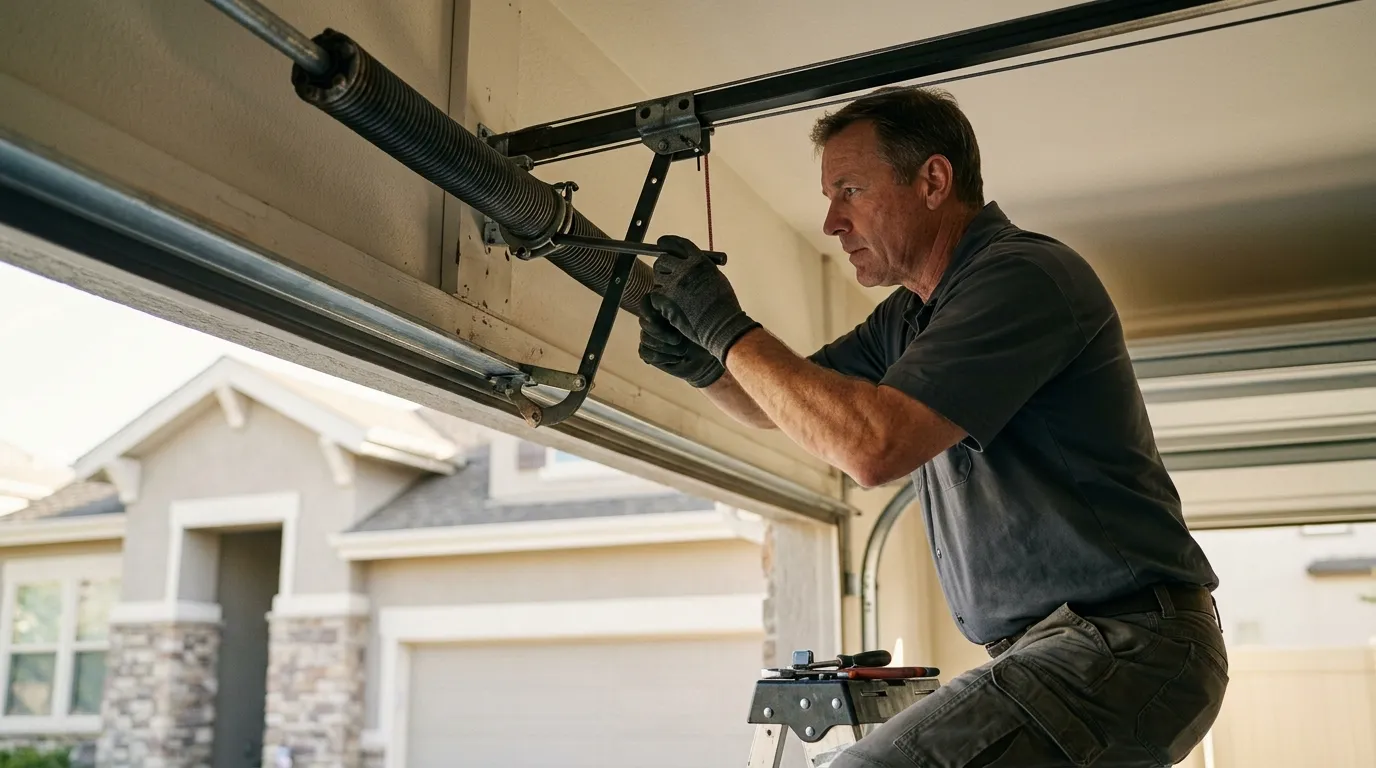
Most calls out of Cedar Grove start the same way: a door that used to close quiet now bangs, drags, or stops halfway and reverses. The house is usually one of the ones built around 1958 - right at the median for the whole area we cover, which runs from 1938 to 1996 with most of it pre-1960. That matters more than the symptom itself.
A door installed when the house went up, or replaced once in the 1980s, is carrying original torsion hardware or a first-generation replacement. The spring wasn't sized for the door it's holding now, or it's original and simply worn out. When you hear grinding on the way up, that's the roller riding a track that's shifted out of plumb over sixty-plus years of frost heave.
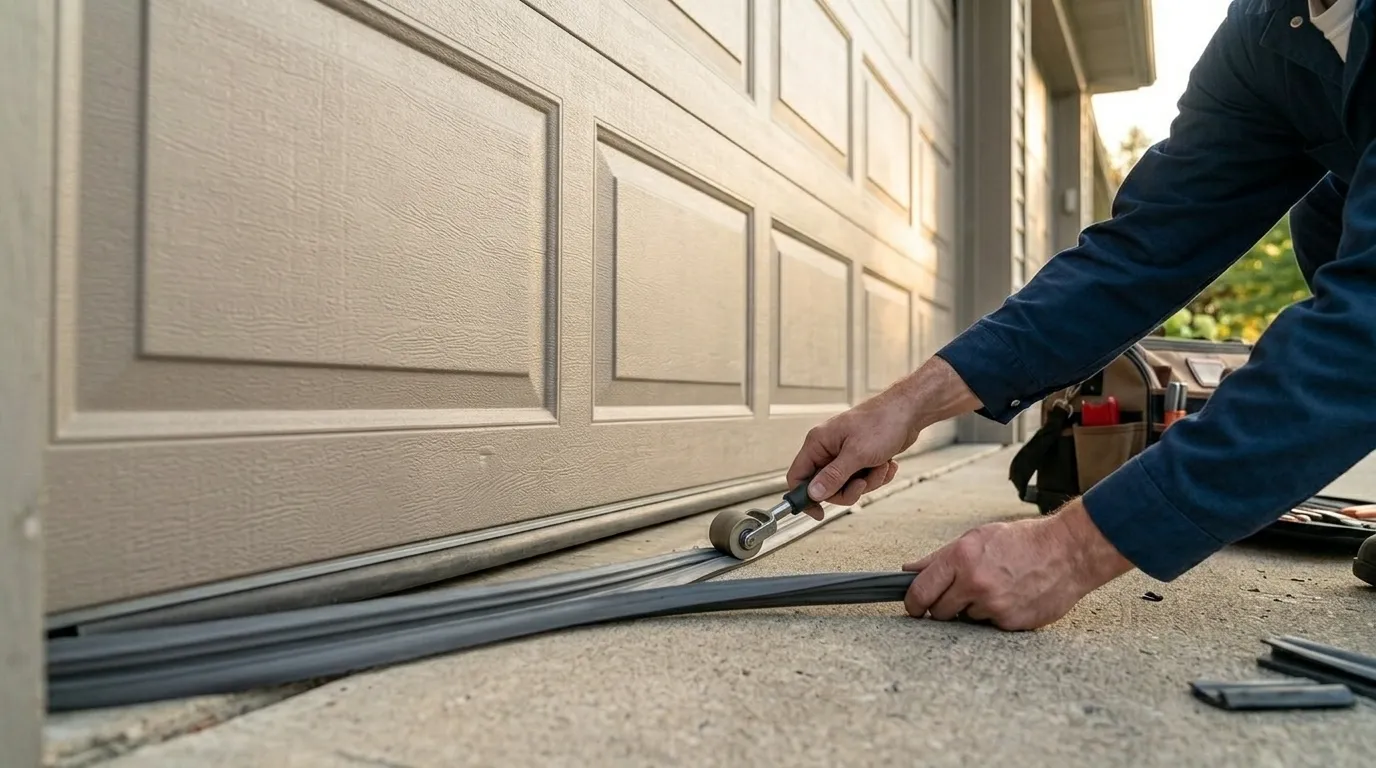
When the door won't seat flush at the bottom, check the bottom bracket first - on a house this age it's likely never been swapped.
Why It Happens Here
Cedar Grove sits about 5 miles from our shop in Wayne, close enough that the housing pattern doesn't change much on the drive over - same postwar building wave, same builders working off the same handful of door designs. With 4,942 households here, a small slice of the roughly 1,067,734 across the full territory, most garages were fitted with single-torsion-spring setups meant for lighter wood doors, not the heavier insulated steel ones many owners have swapped in since.
That mismatch - old spring, new door - is the single biggest driver of premature spring failure we see on 1958-era houses. Add a cold-severe climate band, and steel contracts, lubricant thickens, and a spring already undersized works harder every winter morning than it was ever built to.
The Complications
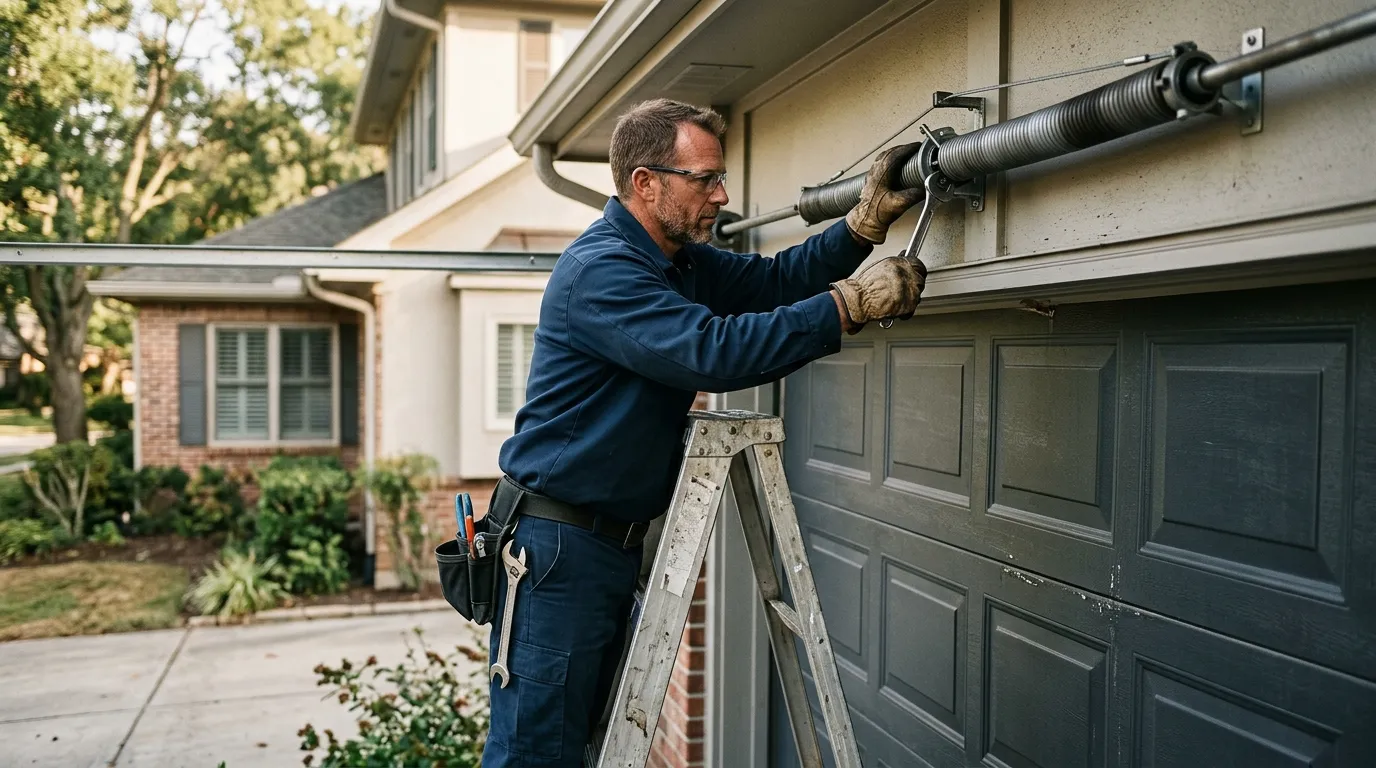
The complication in a town like this isn't finding the part - springs and openers are stock items. It's the header and jamb behind them. Houses from 1958 often have a wood jamb that's settled slightly out of square over the decades, so a straight replacement track sometimes doesn't sit right without shimming.
We've also seen bottom brackets on original doors that were never designed for today's higher-cycle torsion springs; forcing a modern spring onto old bracket hardware is how cables snap. None of this is unique to any one street - it's what you get with a housing stock this age. One honest limitation: if the opener is original to a 1960s-era door, we usually can't source an exact replacement part; at that point rebuilding the opener costs more than replacing it, and we'll say so rather than bill for the attempt.
What the Repair Takes
A torsion spring swap on a standard double door here runs the same labor regardless of the town, but the diagnostic step takes longer on older houses because we're checking bracket condition and jamb square before we touch the spring. On a house from 1958, that inspection isn't optional - skipping it is how a repair becomes a callback.
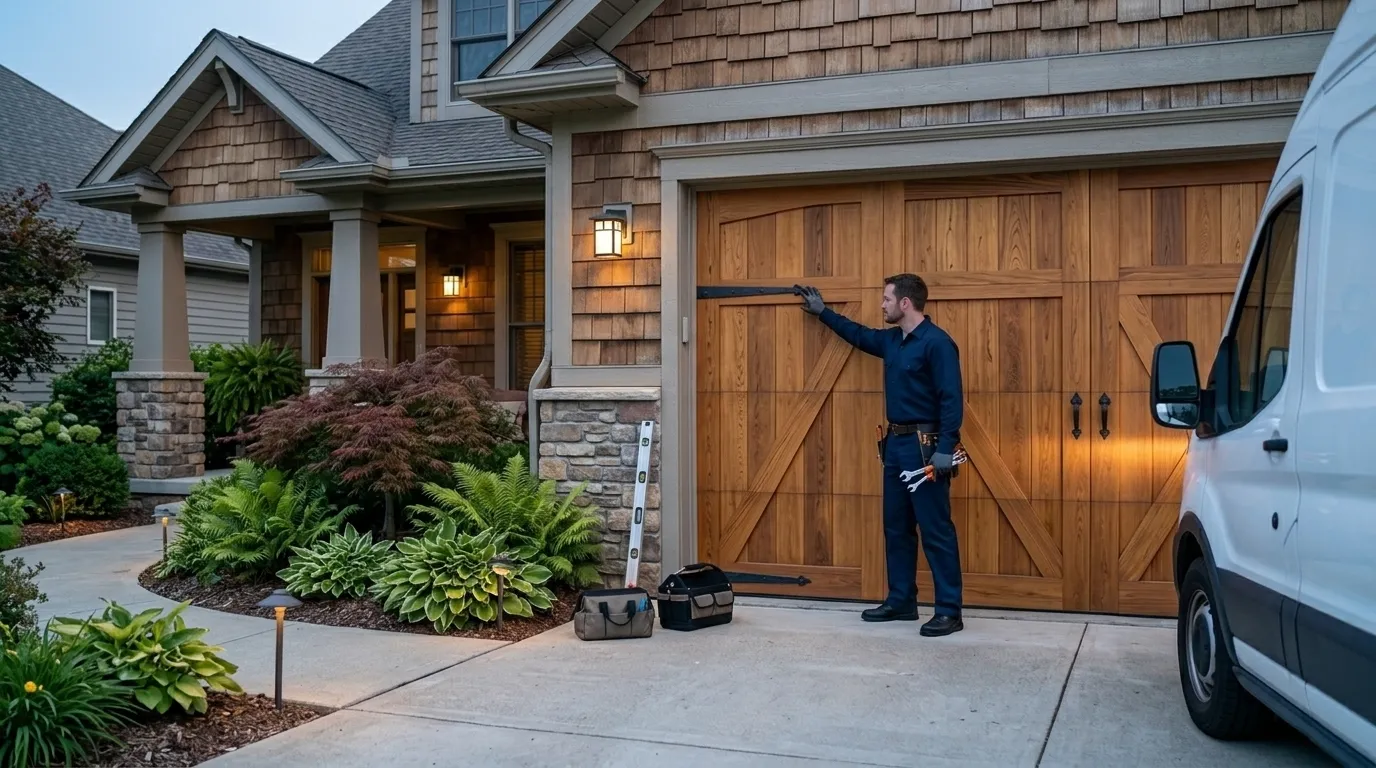
If the door itself is original wood and warped from sixty years of temperature swings, replacement is usually the honest recommendation over another patch repair; wood doors from that era don't hold insulation values that make sense against a cold-severe winter anymore. We'll tell you straight when a repair is throwing money at a door that's past the point of being worth saving.
The DIY Question
Torsion springs are under enough stored tension to break a bone or worse, and that doesn't change based on what year the house was built. What does change on a place like Cedar Grove is that the hardware underneath is old enough that a DIY spring swap kit sized for a modern door frequently doesn't fit the original bracket spacing.
If you're comfortable replacing rollers or tightening hinge bolts, that's reasonable homeowner work. Springs, cables, and anything holding the door up under tension is not - call it in, especially on hardware this age where the failure mode is less predictable than on a newer install.
What Is on the Truck
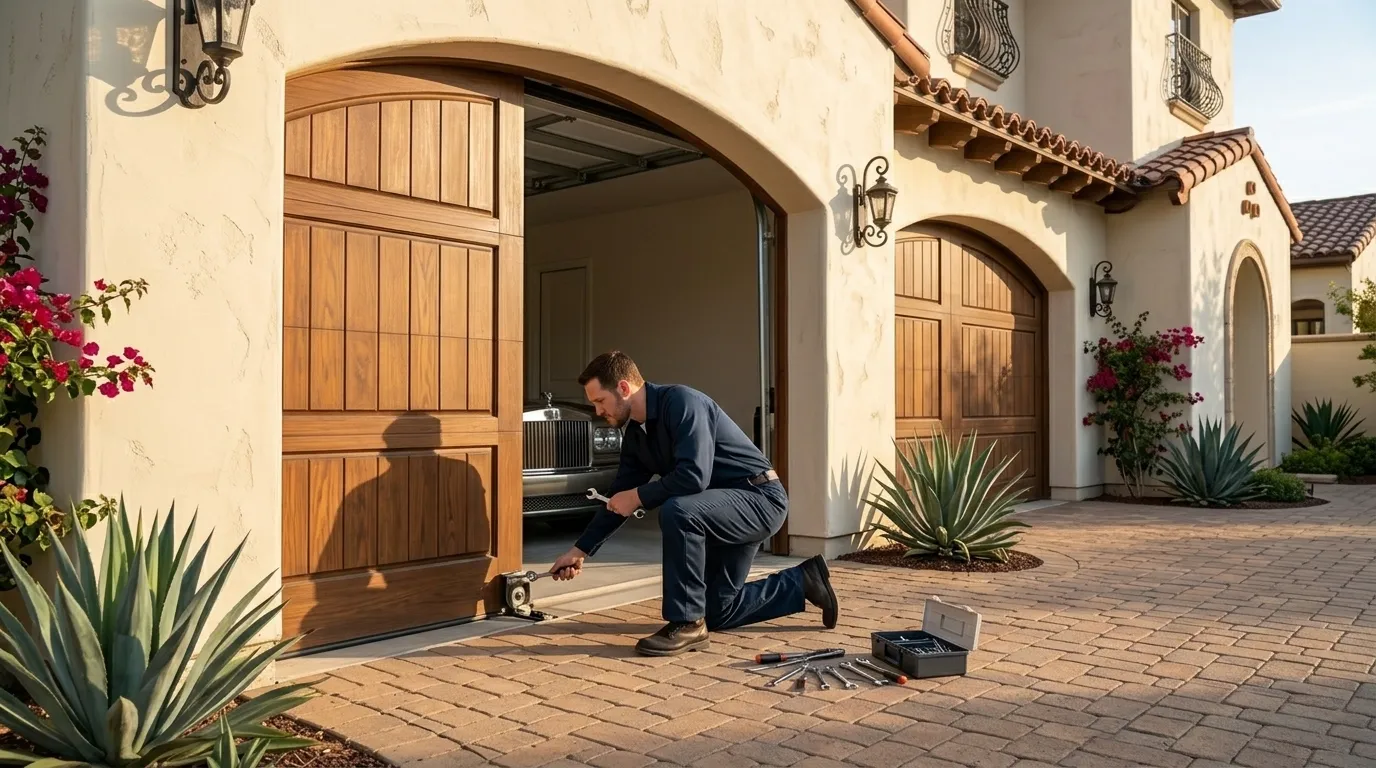
We stock torsion springs across the common sizes we see on 1950s-through-1990s doors, standard cable, rollers, and the openers that fit most residential setups without a special order. What we don't carry is a match for every original wood panel door from the 1958 building wave - those sometimes need a manufacturer we can't source same-day, and we'll tell you that up front rather than have you wait on the truck for a part that isn't coming. For anything else on a Cedar Grove call, the truck rolls with what a standard postwar-era torsion setup needs.
Talk to a Cedar Grove Technician First
Describe what the door is doing and get a straight answer on what it likely needs.
Other Garage Door Services in Cedar Grove
Recent Work in Cedar Grove
A look at jobs our crew has been on nearby.
Why Cedar Grove Calls Us
Frequently Asked Questions
Why does my garage door in Cedar Grove need work more often than my neighbor's newer house nearby?
Cedar Grove's housing stock centers on 1958, close to the regional median of 1959. Older torsion hardware, original brackets, and decades of freeze-thaw in a cold-severe climate all add up to more wear than a house built in the 1980s or later would show.
Do you have a branch in Cedar Grove?
No. We're based in Wayne, about 5 miles out, and drive over for every call in Cedar Grove. There's no local depot here - it's a service call from the Wayne shop, same as the rest of the towns we cover.
Is it worth repairing an original door from a 1950s Cedar Grove house?
Depends on the door. If it's wood and warped or the bracket hardware is worn past matching, replacement usually makes more financial sense than another patch. We'll look at the specific door and tell you honestly which side of that line yours falls on.
How does Cedar Grove's income level affect what you recommend?
It doesn't change the diagnosis, but median household income here runs around $153,038, well above the wider service area's $126,078, so we see more owners choosing full replacement over repeated patch repairs on doors that are past their useful life.
Need Garage Door Service in Cedar Grove?
Call now for straight answers on cost and timing.