
Opener Repair in Pompton Lakes
Opener Repair for Pompton Lakes' 1960s Garages
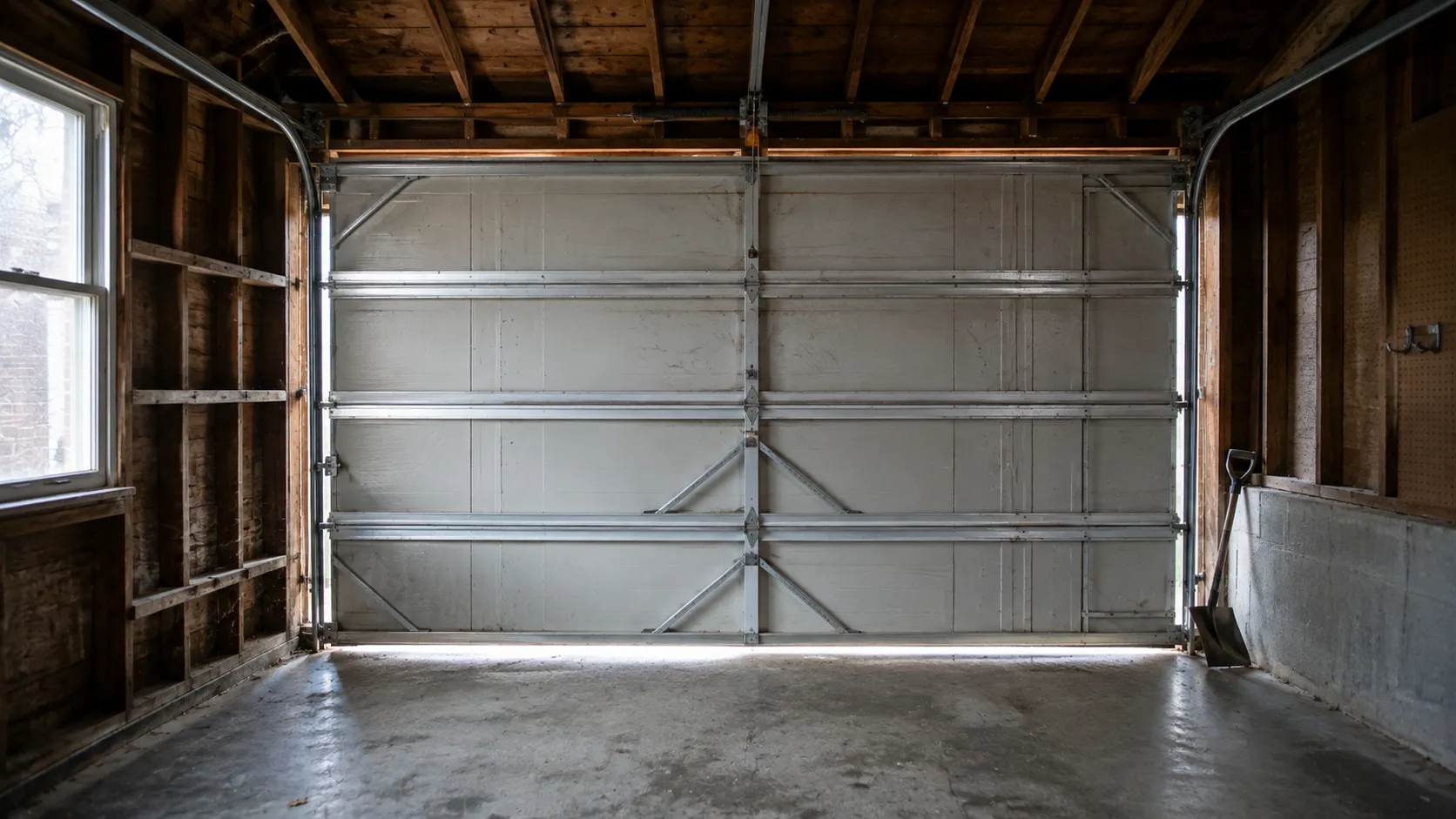
Pompton Lakes homes date to about 1960, which means older chain-drive openers on joists never built for them. We come from Wayne, 5 miles away, to fix them.
- Licensed & Insured
- Same-Area Service Calls
- Upfront Pricing
What Happens When You Call
-
1
Call or Request a Quote
Tell us what the door is doing and roughly how old the house is - that alone points us toward the likely part before a truck leaves.
-
2
On-Site Diagnosis
A tech checks the spring, cables, tracks, and opener in person and tells you plainly what is actually wrong.
-
3
Straight Price, No Surprises
You get a number before any work starts. It covers parts and labor, nothing added after the fact.
-
4
Fixed the Same Visit
Most repairs are done in one trip. If a part needs sourcing, we tell you that upfront instead of guessing.
The Cost of This Job
What you pay depends on what's actually wrong, and in Pompton Lakes that usually comes down to age. A lot of these houses went up around 1960, and the opener bolted to the joist above the car is often the second or third one that garage has ever had. If it's a logic board, a worn drive gear, or a burnt-out capacitor on an otherwise sound unit, that's a repair, not a replacement.
If the motor housing is cracked or the unit predates rolling-code remotes entirely, replacing it usually costs less over five years than keep patching a unit that's already outlived its parts supply. We won't know which one you've got until we're standing under it. One honest limit here: if the opener is an obscure or discontinued brand from that era, we may not be able to source the exact board, and we'll say so up front instead of quoting a repair we can't actually finish.
How Long It Takes
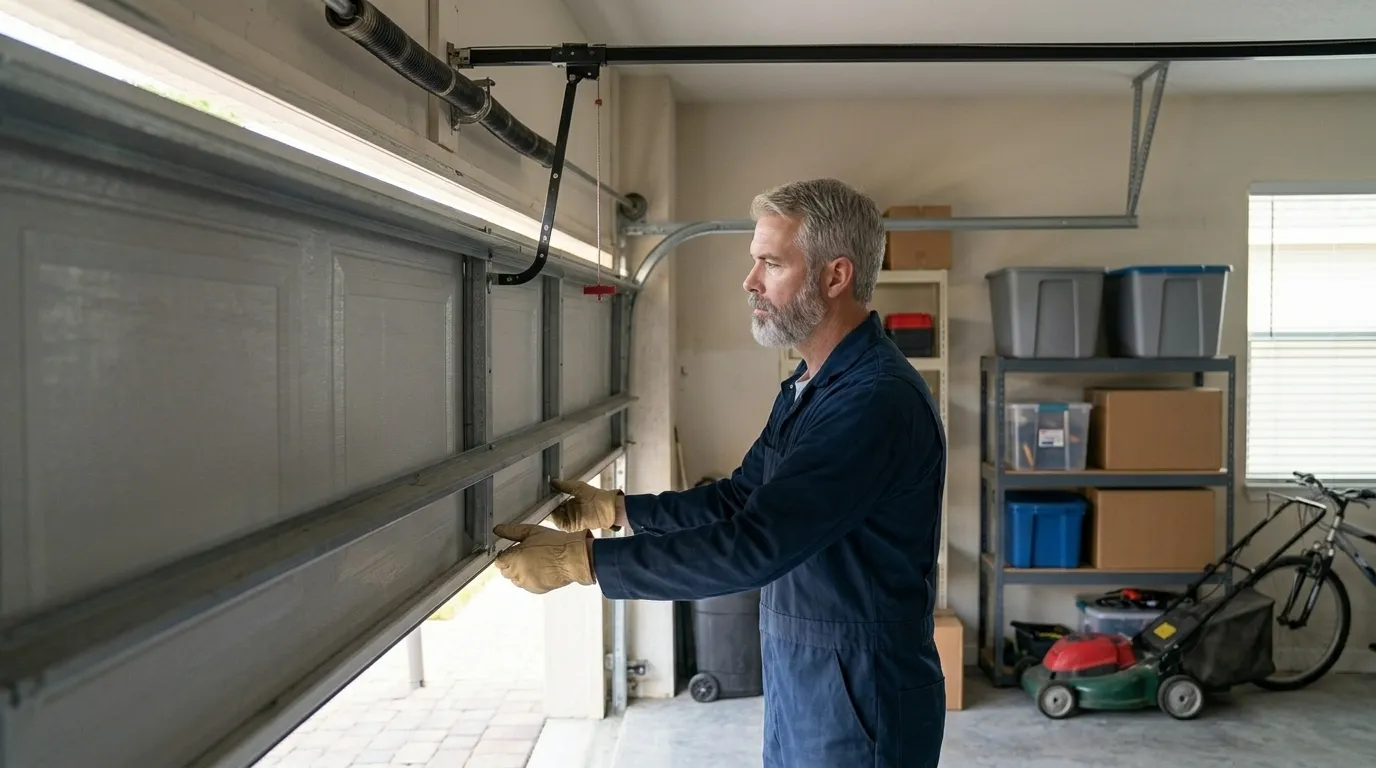
Most opener repairs in Pompton Lakes run under two hours once we're on site, since the fix is usually a part swap, a sensor realignment, or a chain adjustment rather than anything structural. Wayne is five miles out, so travel time doesn't eat much of the day.
Where it stretches longer is when the opener is old enough that the bracket, rail, and motor were installed as a single unit and nothing on it matches current mounting hardware. Then we're fabricating a fit instead of bolting in a replacement, and that adds time we won't guess at over the phone.
The DIY Question
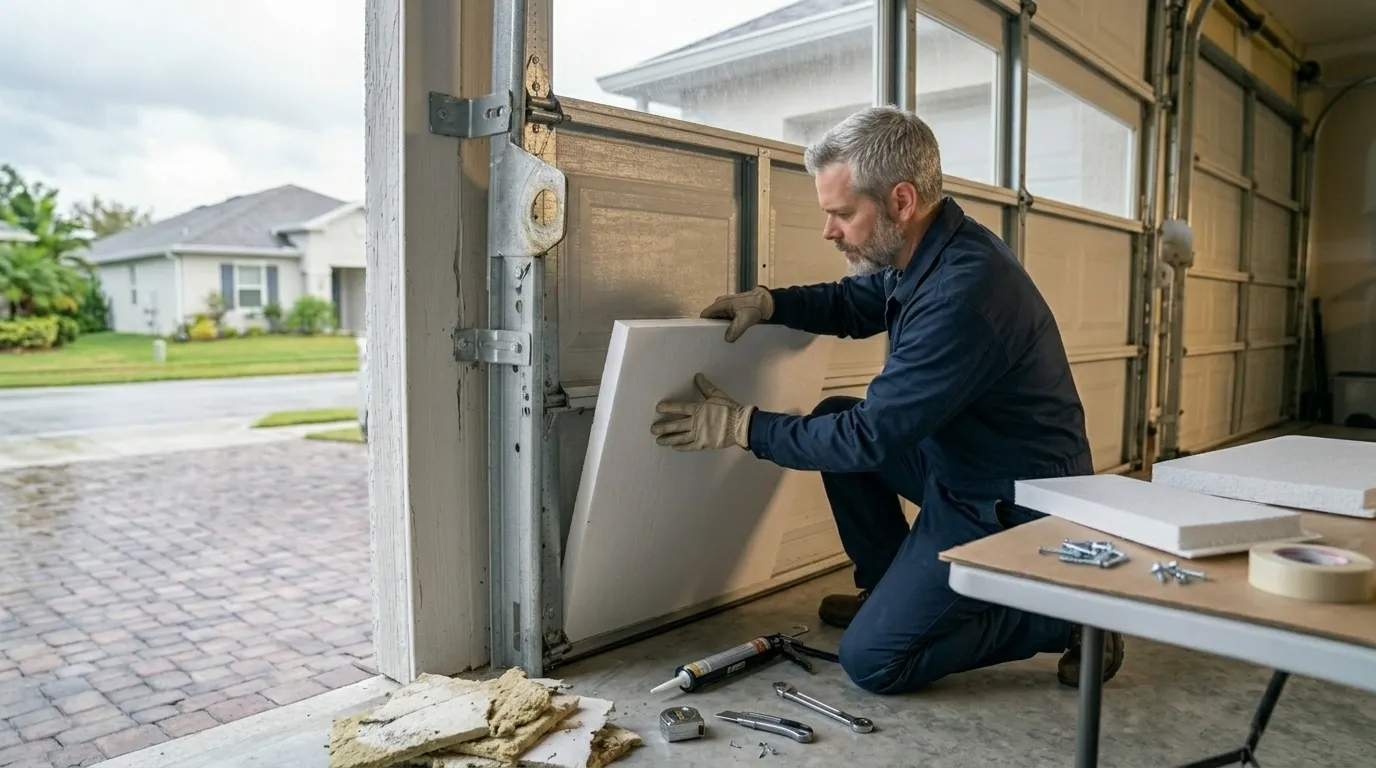
Realigning a photo-eye sensor or replacing remote batteries is fair game for a homeowner with a ladder. Diagnosing why a door reverses halfway, or why the opener runs but the door won't move, is a different problem, especially on a house from the 1960 era where the original track and the opener were never designed as a matched pair to begin with.
Pulling the wrong panel or forcing a jammed chain can turn a $150 sensor fix into a $600 rail replacement. If the door is heavy, springs are involved, or the opener has been making a grinding sound for more than a week, that's the point to stop and call rather than keep testing it yourself.
The Symptom
The calls we get from this part of town tend to sound the same: the opener hums but the door doesn't lift, or it lifts a few inches and reverses. On houses built close to 1960, that's often a drive gear stripped from age rather than a bad motor, since the gear is plastic and the motor usually outlasts it. On newer retrofit openers installed in the last fifteen or twenty years, the same symptom is more often a misaligned safety sensor, especially after someone's stored something tall too close to the track.
Both look identical from inside the car. They're not the same fix.
The Complications
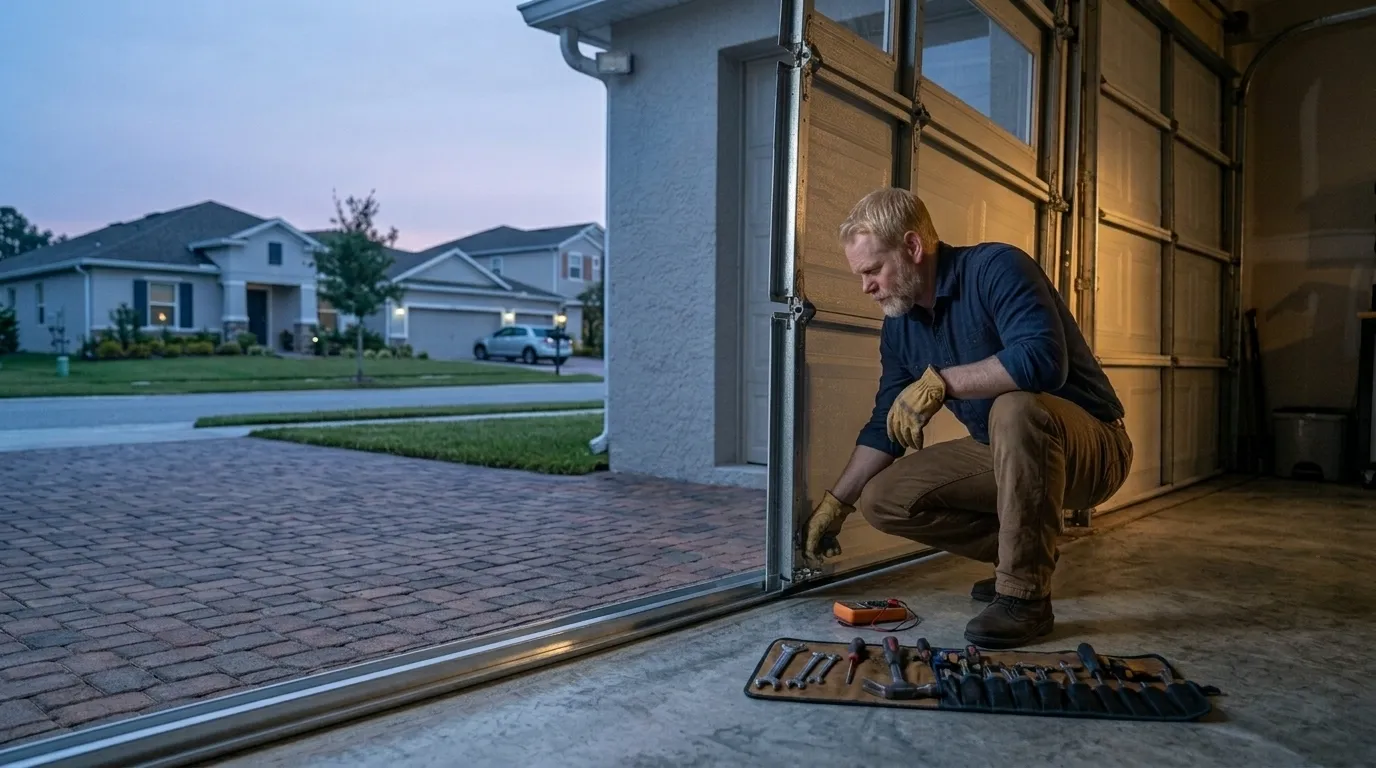
Cold matters more here than people expect. This region sits in a severe cold climate band, and grease in an opener's chain or screw drive stiffens hard in a January cold snap, which is when a marginal motor finally gives out.
On a house from 1960, the opener's mounting bracket is also often original to a retrofit job done decades after the house itself, so we sometimes find lag bolts into a joist that's already been drilled twice before. That's not a Pompton Lakes-specific defect, but it's common enough in housing this age that we check for it before hanging a new unit on the same holes.
Why It Happens Here
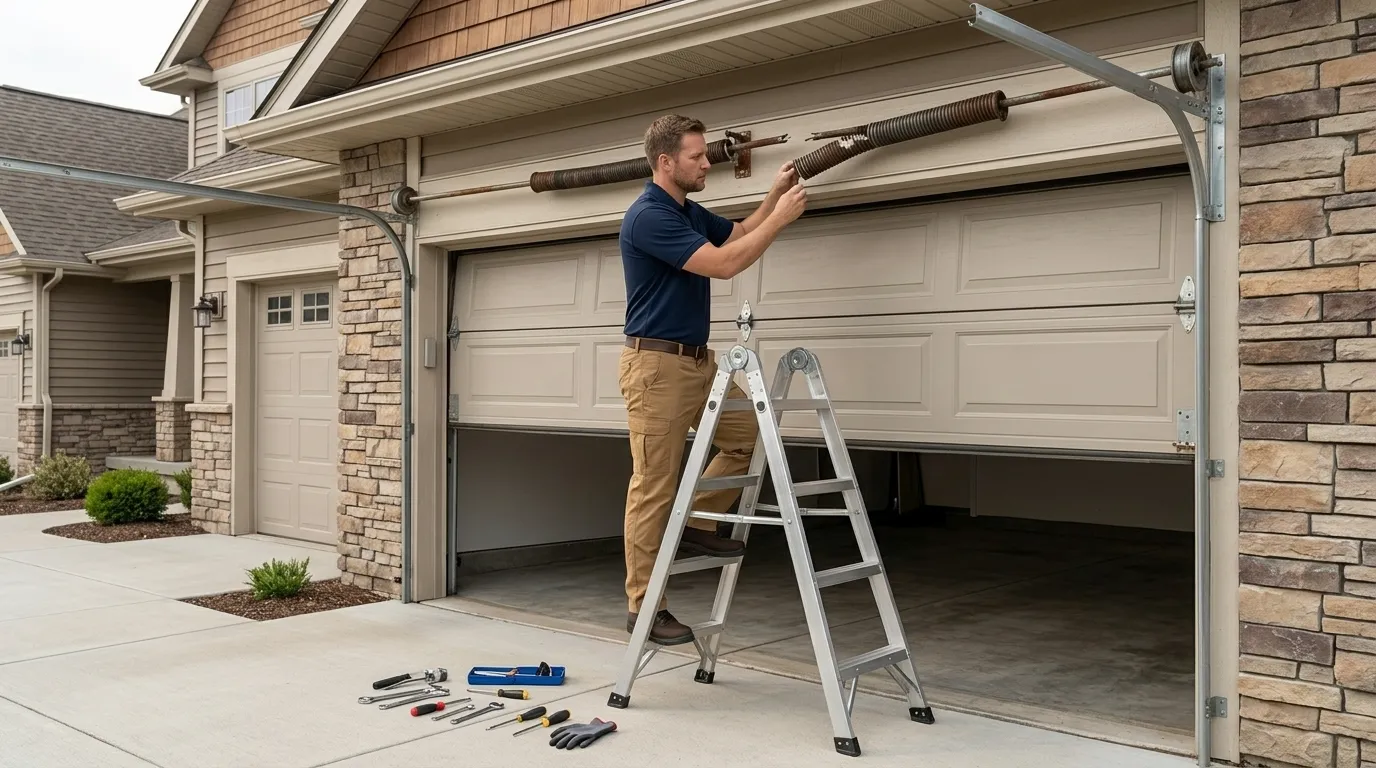
Pompton Lakes' housing stock centers on 1960, which puts a lot of these garages right at the point where openers went from a rare add-on to a standard feature - meaning plenty of units here are second-generation replacements bolted onto brackets that were never re-engineered for anything heavier. Median household income in town runs $119,038, a bit under the roughly $126,000 median across the wider area we cover, and with 4,142 households here, most of the calls we get are people extending the life of a working system rather than doing a wholesale swap. Add the region's severe cold winters, and the pattern holds: age plus cold is what finally puts a strained drive gear or a tired capacitor over the edge.
Talk to a Pompton Lakes Technician First
Describe what the door is doing and get a straight answer on what it likely needs.
Other Garage Door Services in Pompton Lakes
Recent Work in Pompton Lakes
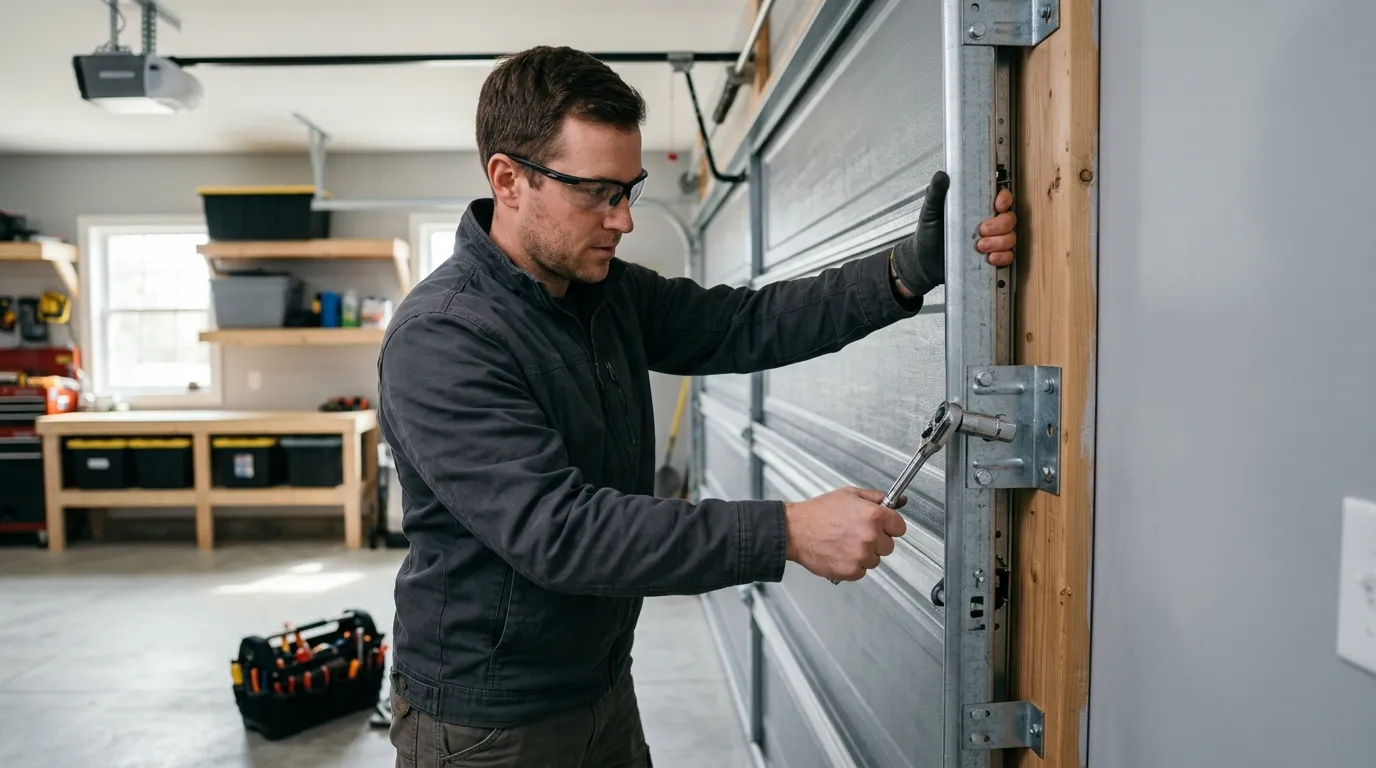
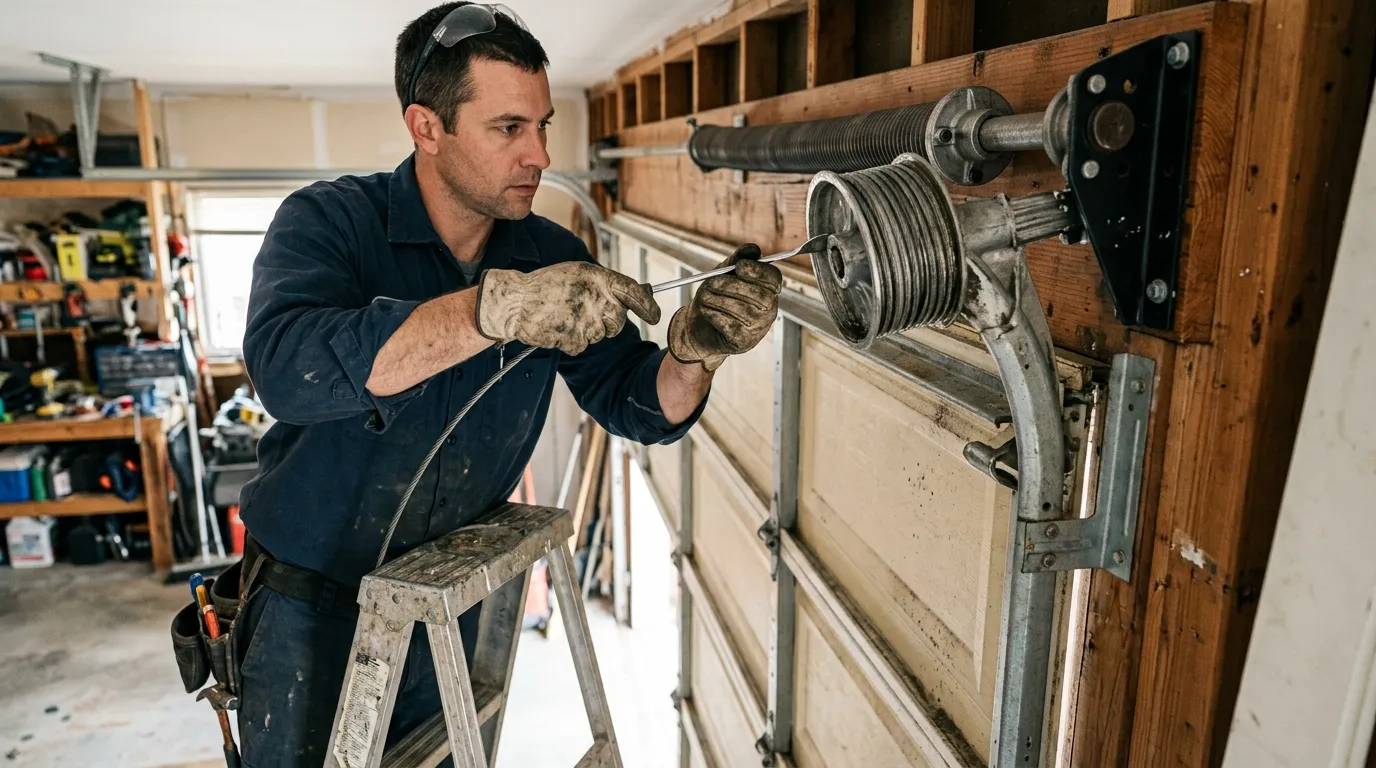
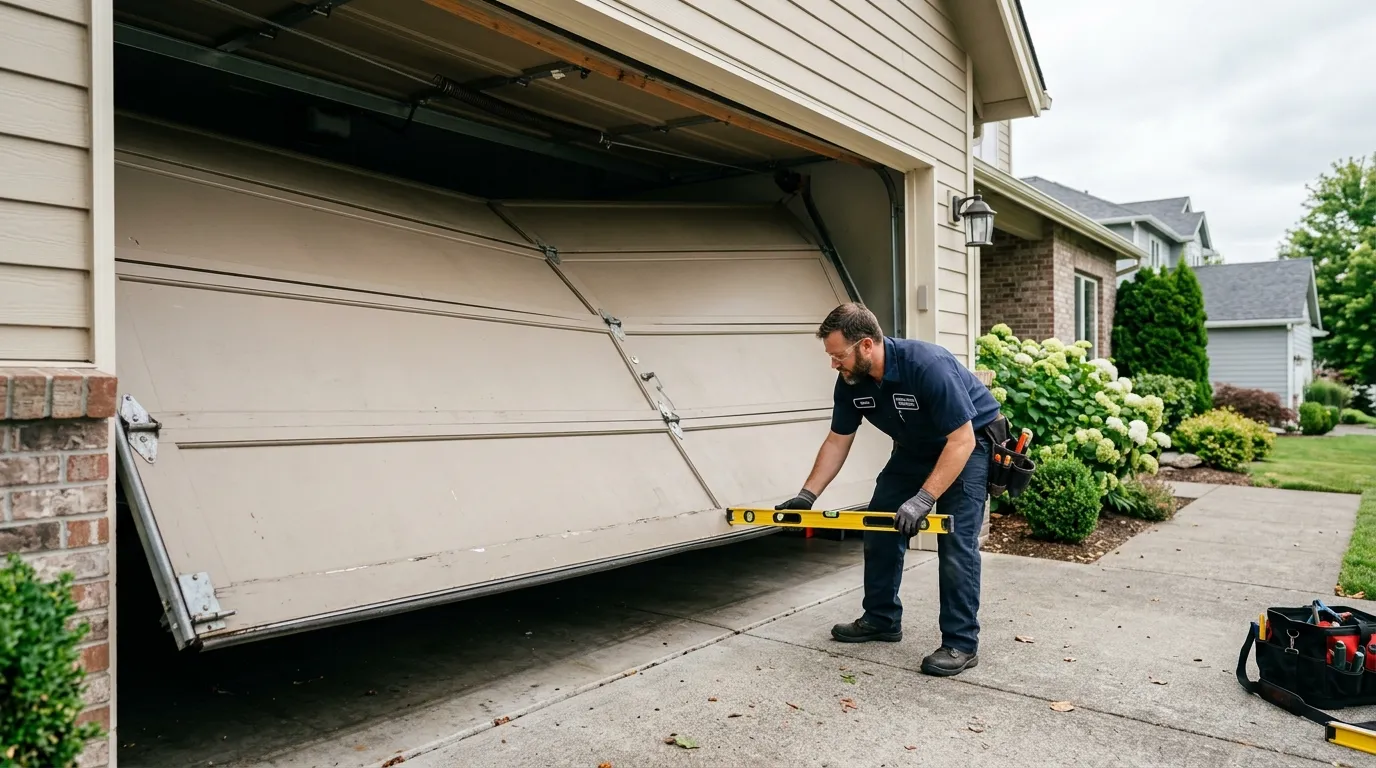
A look at jobs our crew has been on nearby.
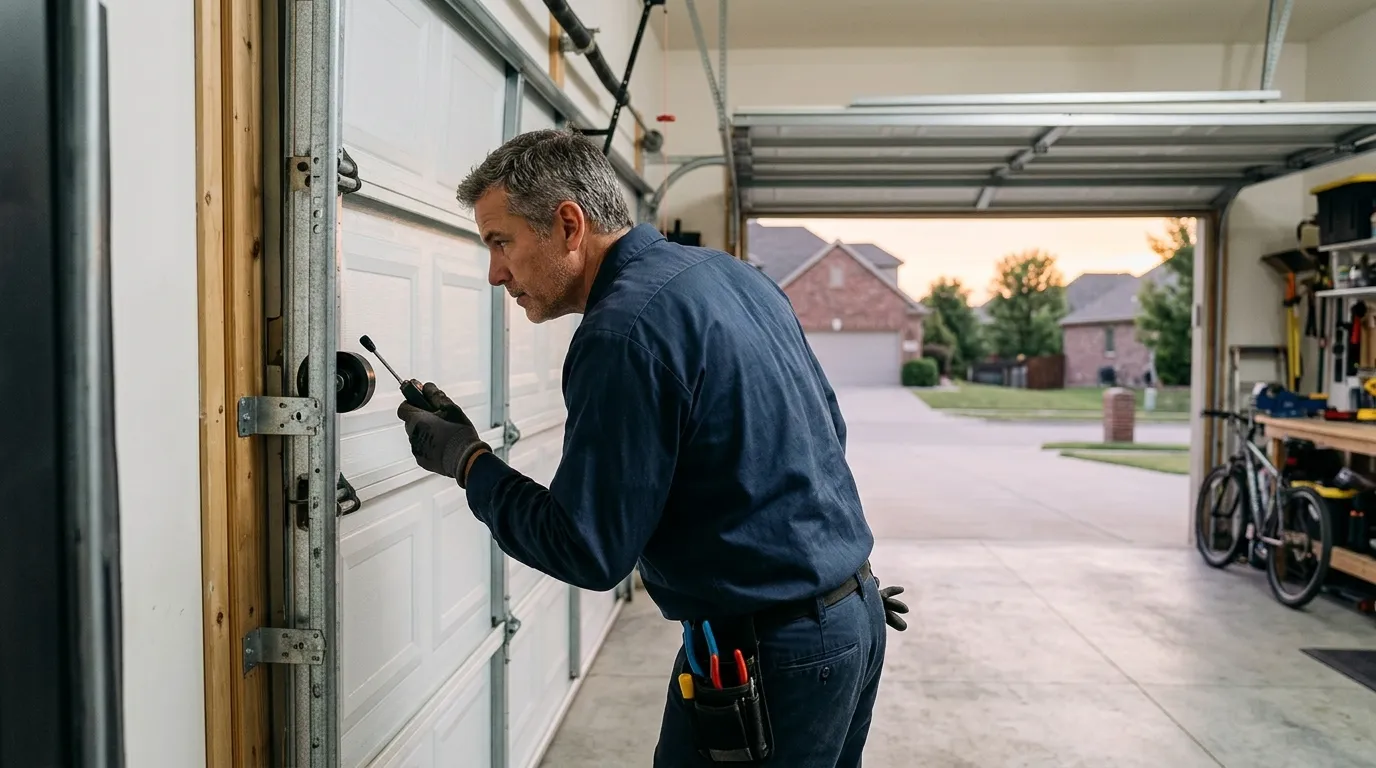
Why Pompton Lakes Calls Us
Frequently Asked Questions
Do you have a shop in Pompton Lakes?
No. We're based in Wayne, about five miles away, and we drive out for opener calls in Pompton Lakes as part of our regular coverage area. There's no local branch or drop-off point here.
Why does my opener only act up in winter?
This area sits in a severe cold climate band, and grease inside the drive mechanism stiffens when temperatures drop. A motor or gear that's already worn will often fail first on a cold morning, even though the underlying wear built up over months.
Is my opener too old to repair?
It depends on the brand and how obscure the parts are. Houses here median around 1960, so we see plenty of decades-old units. If a board or gear for your model is still available, repair usually makes sense. If it's discontinued, we'll tell you that plainly instead of guessing at a fix.
Need Opener Repair in Pompton Lakes?
Call now for straight answers on cost and timing.