
Nearby Community
Garage Door Help for Dumont Homes, Sent Out From Wayne
Wayne Garage Door Pros drives 15 miles to Dumont for spring, opener and track repairs on the borough's mostly pre-1960 housing stock. No local depot, no invented promises.
- Licensed & Insured
- Same-Area Service Calls
- Upfront Pricing
Garage Door Services in Dumont
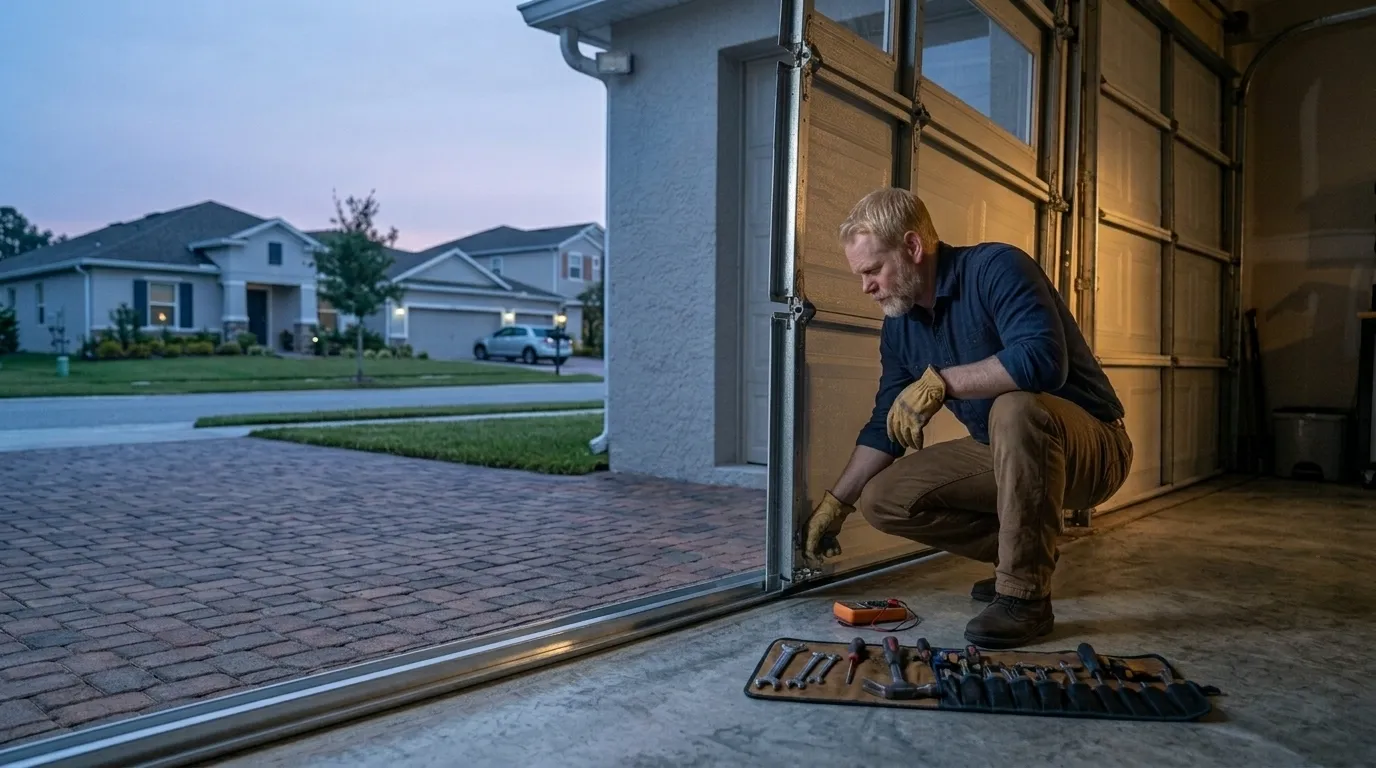
Garage Door Opener Repair
Openers that hum, stall, or reverse - diagnosed and fixed, from worn gears to logic boards.
Learn more →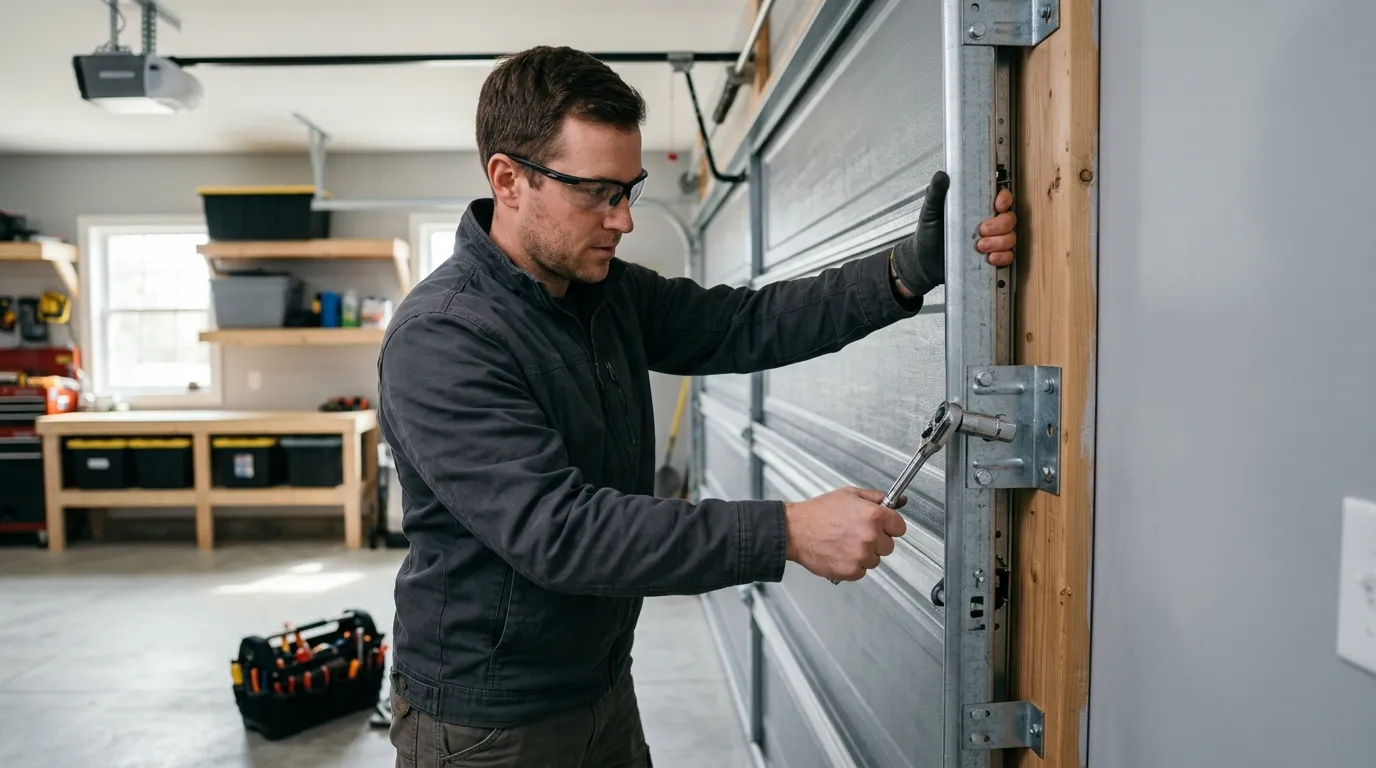
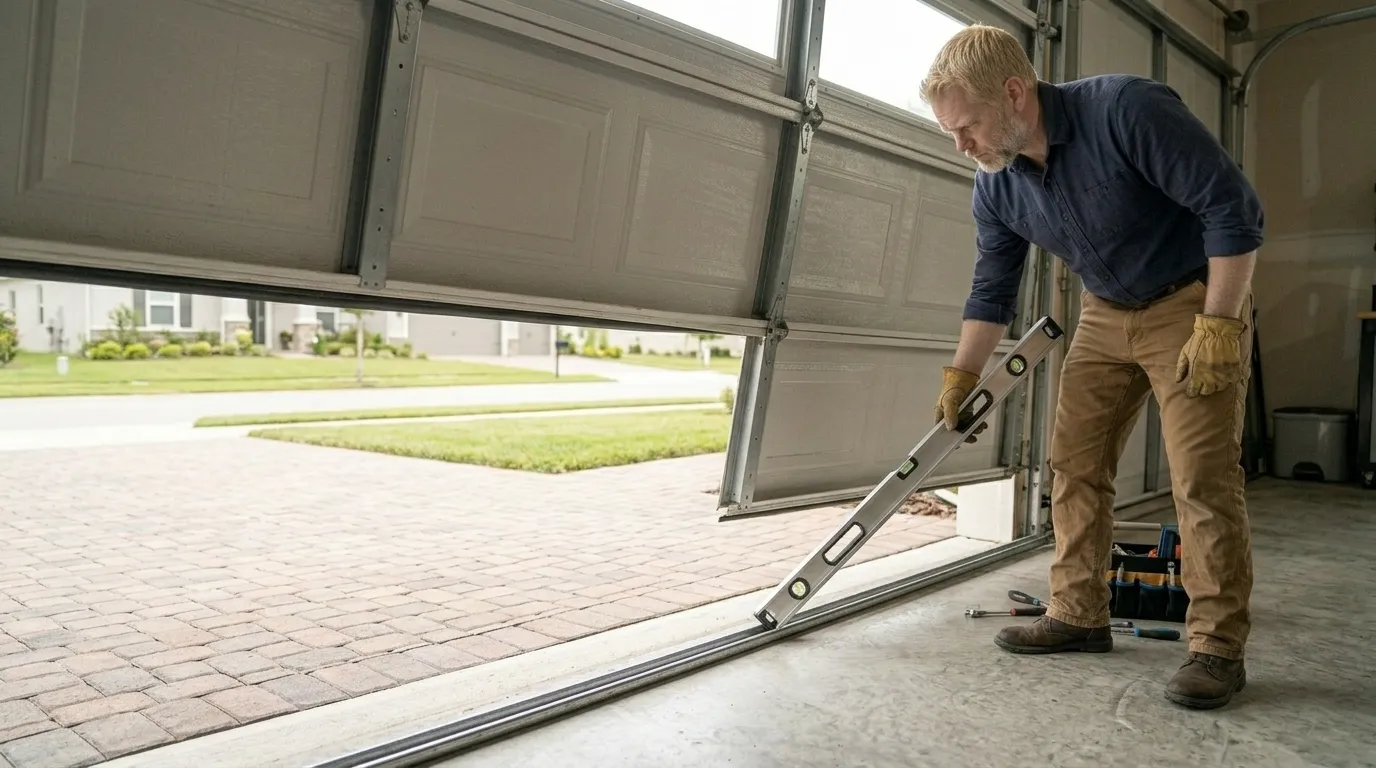
Garage Door Repair
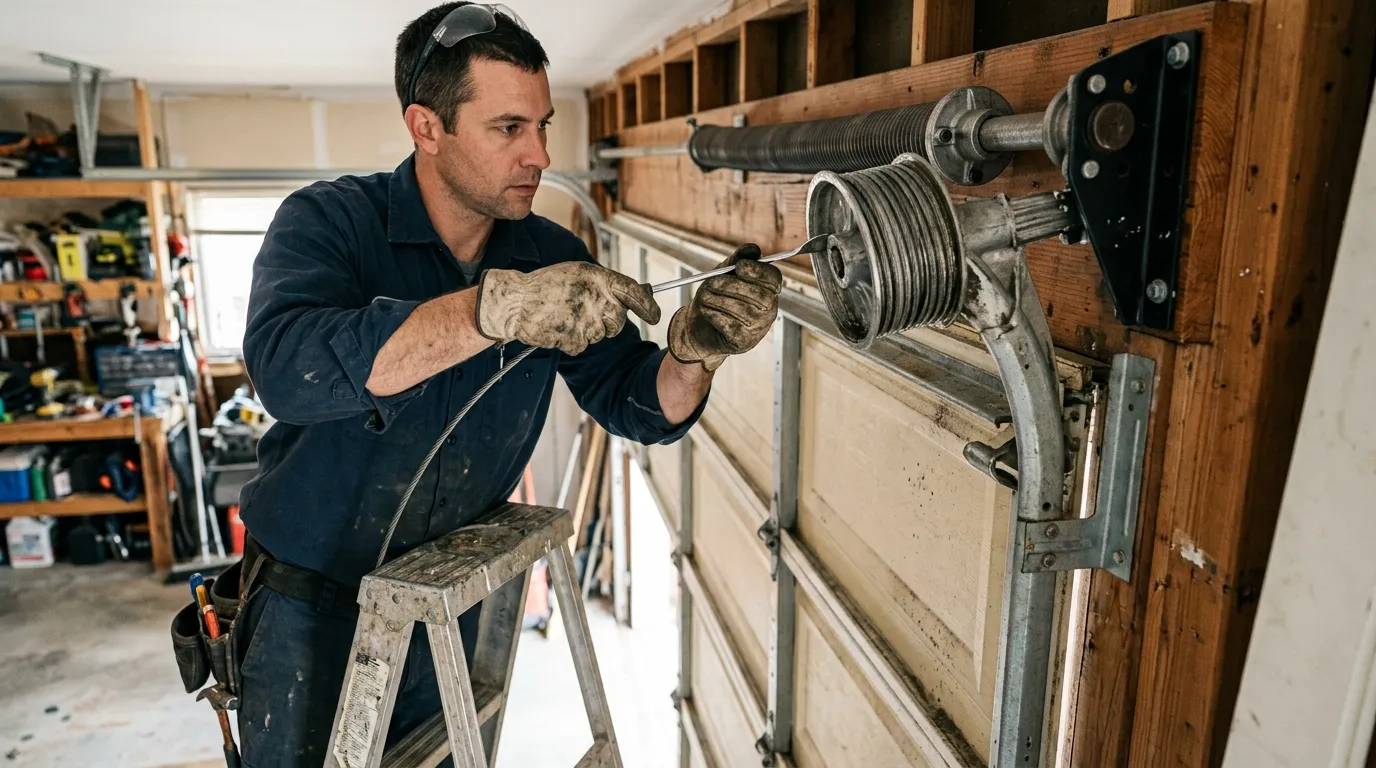
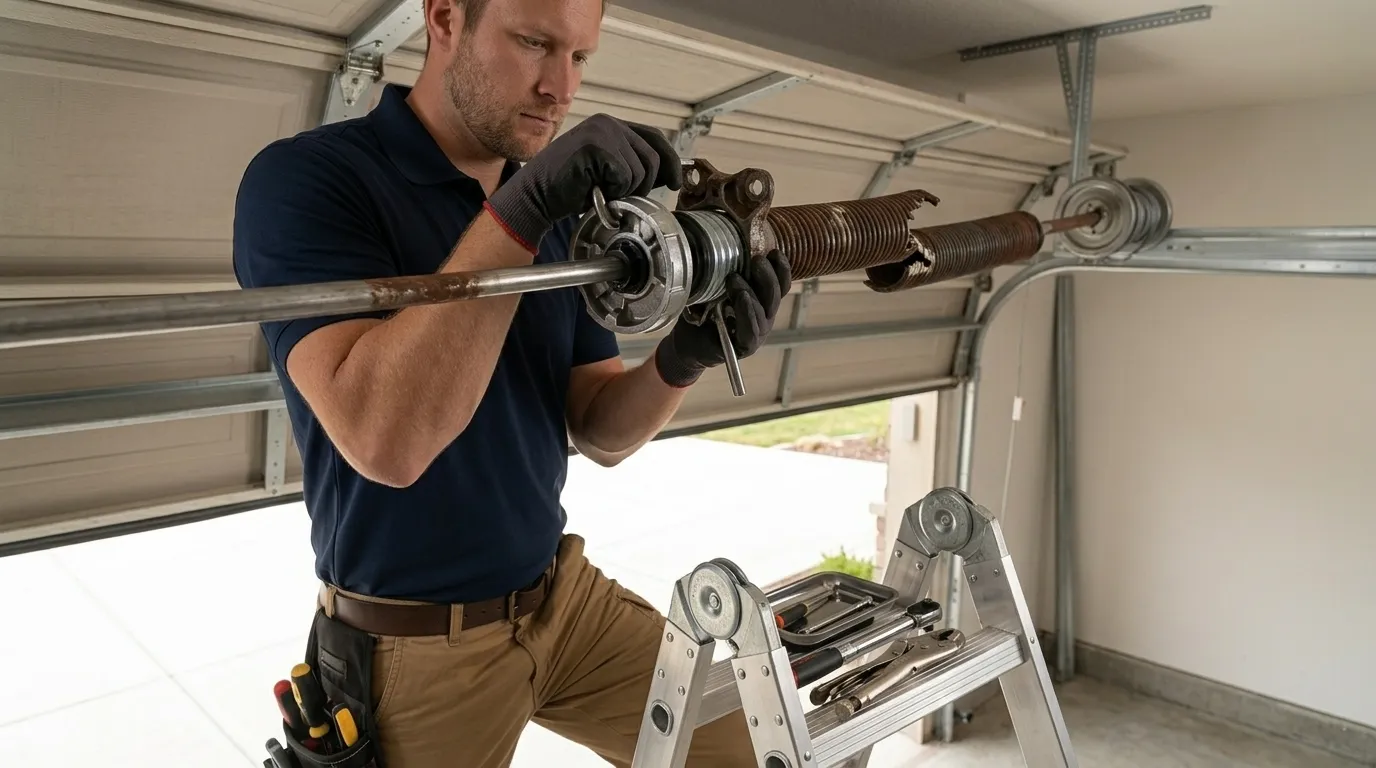
Springs, cables, tracks, rollers, and openers fixed by a tech who explains the problem before touching anything.
Learn more →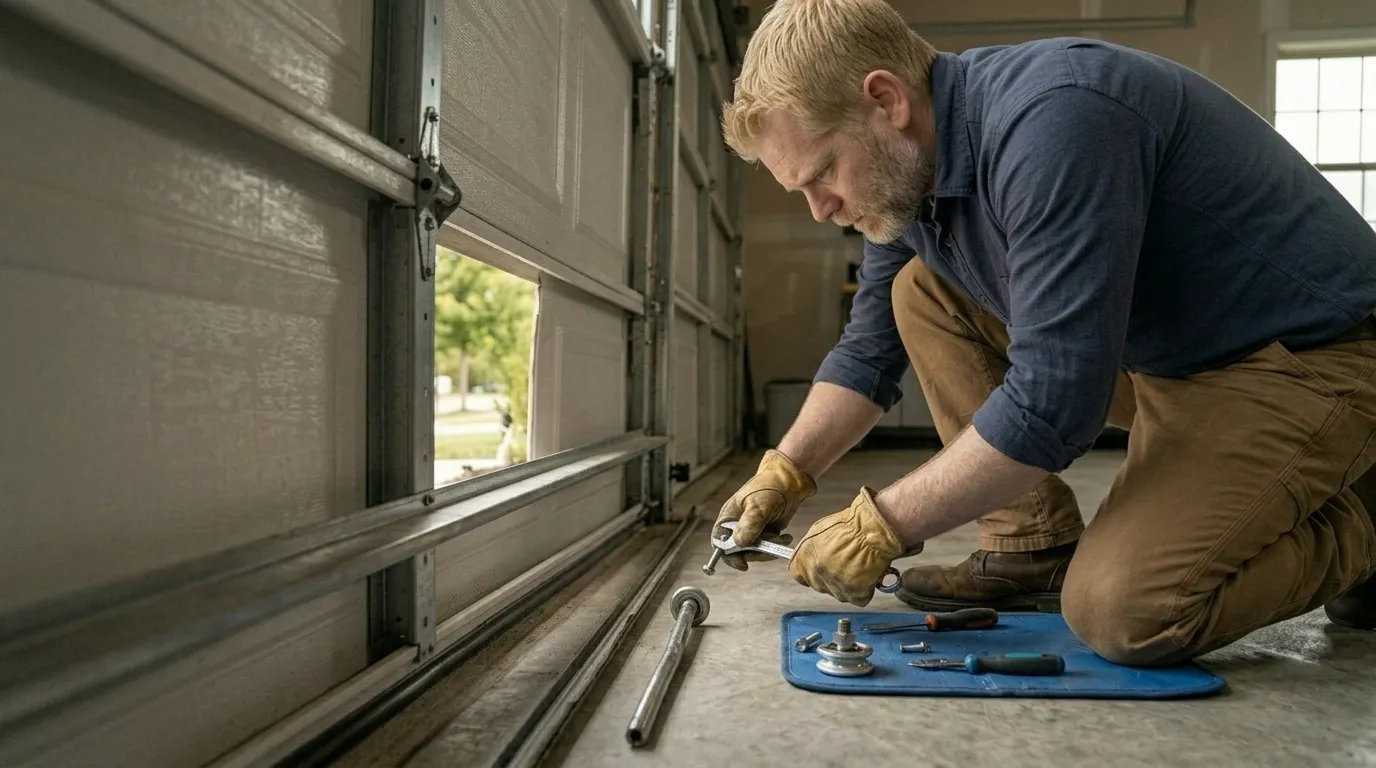
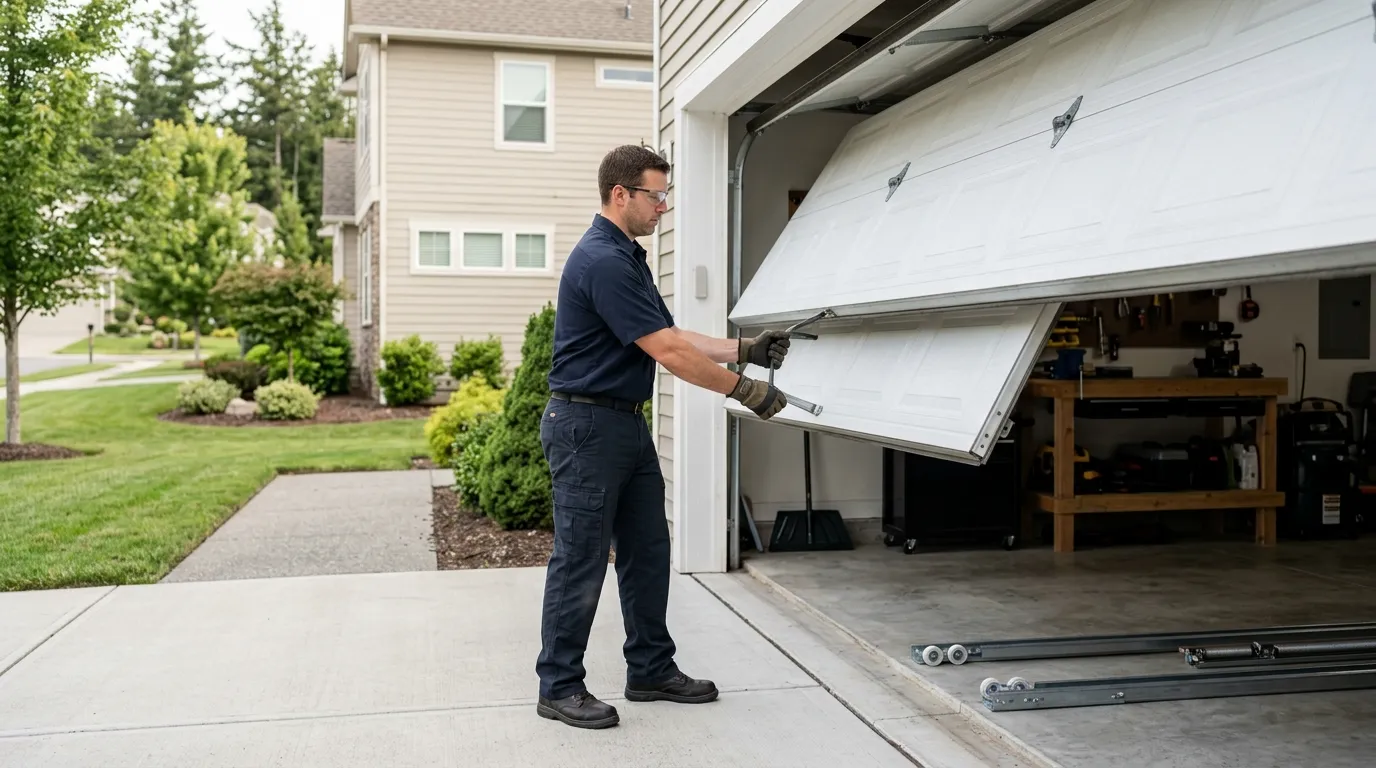
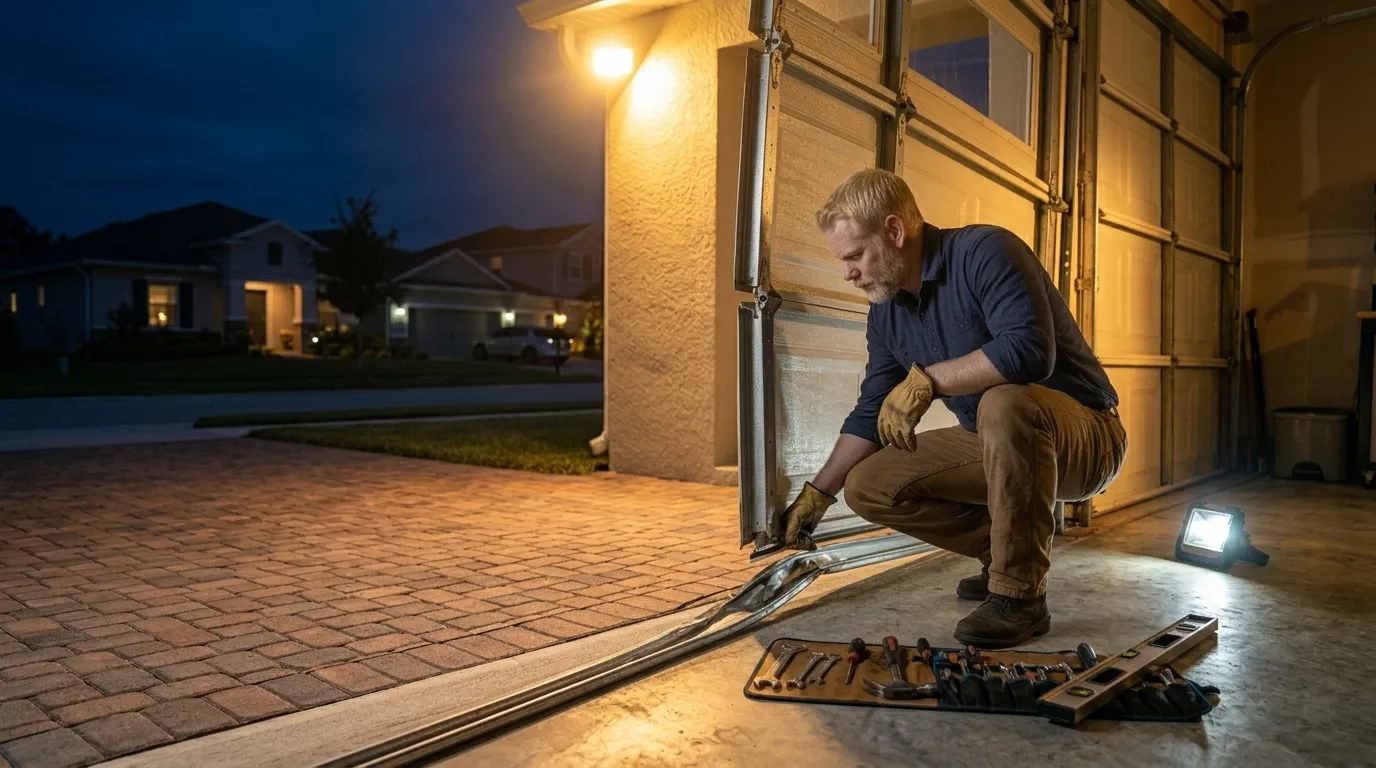
Garage Door Off Track
Doors that jumped the track reset safely, with rollers and alignment checked so it holds.
Learn more →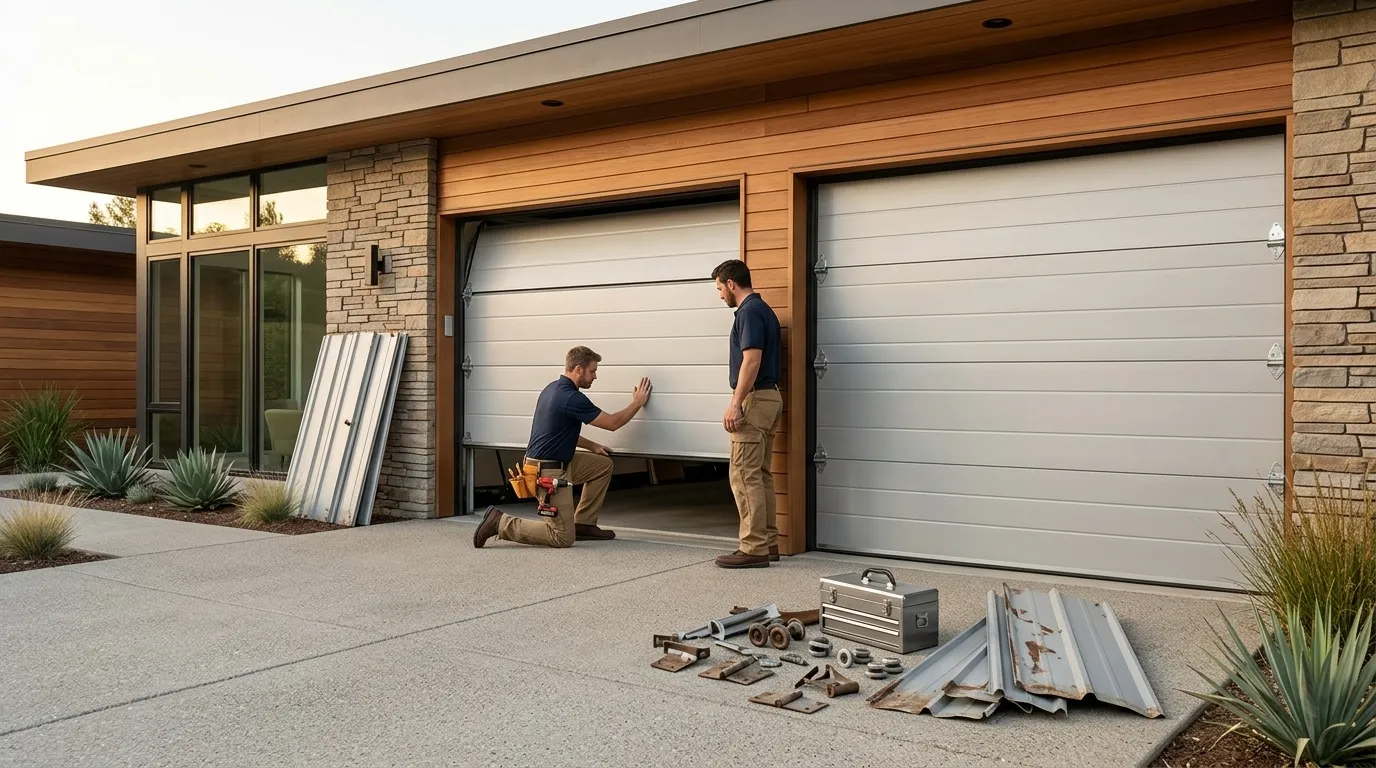
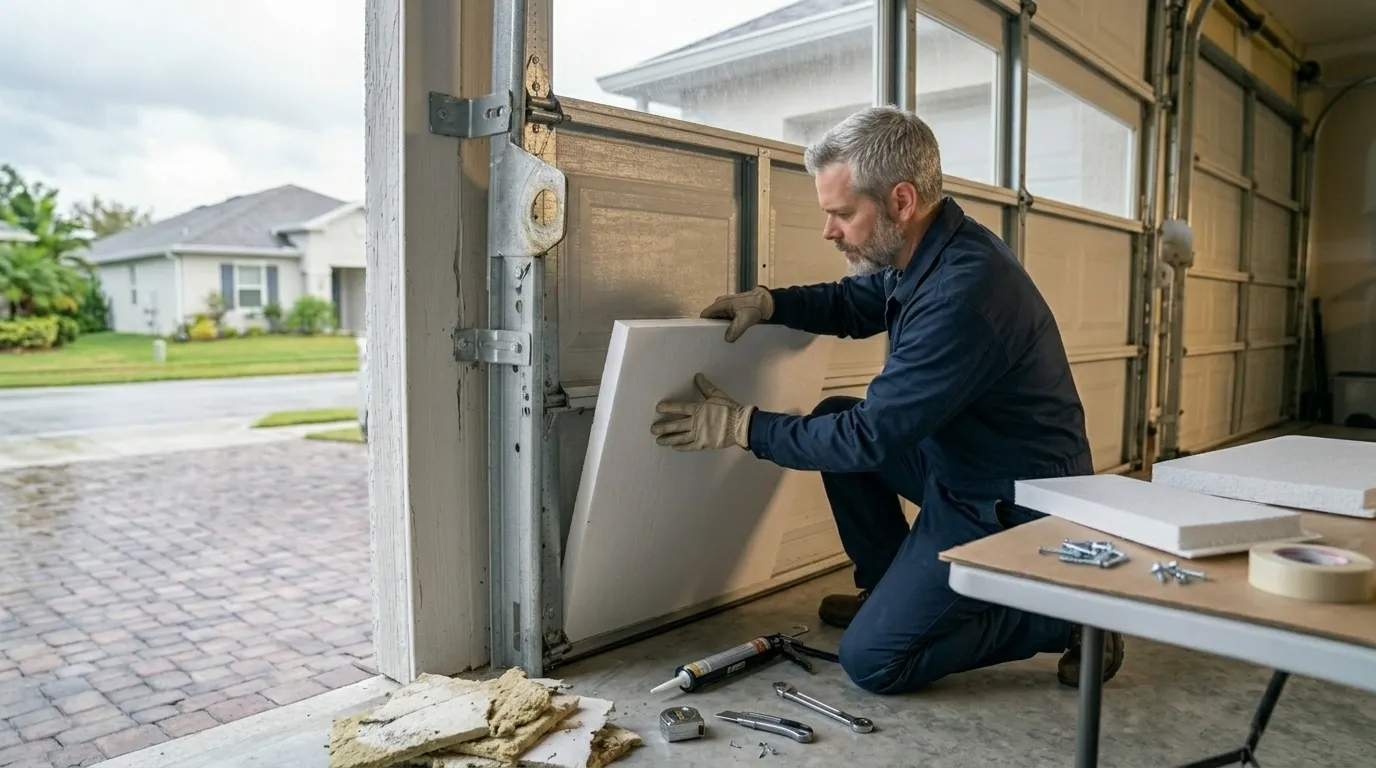
Garage Door Panel Replacement
Dented or cracked panels swapped without replacing the whole door where the frame is sound.
Learn more →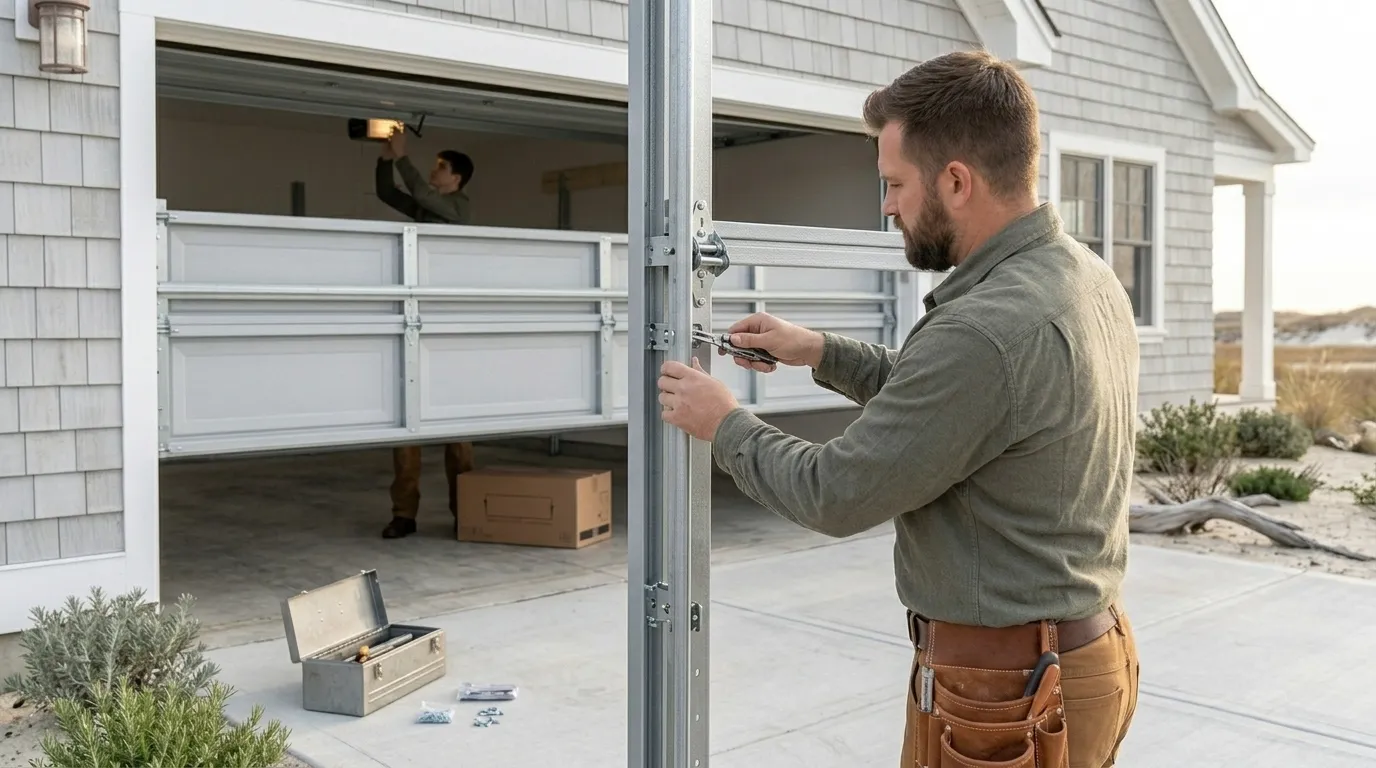
Garage Door Opener Installation
New openers sized to your door and set up with the safety sensors dialed in.
Learn more →The Drive Over
We don't have a shop in Dumont. Our trucks come out of Wayne, about 15 miles away, so when you call us the job goes on the route for that day rather than getting handled by someone parked around the corner.
That's the honest limitation: if you need a same-hour fix on a Tuesday afternoon, a shop that's already in town has the edge on us. What we can tell you is that once we're in Dumont, we're working on doors that look a lot alike, because the borough built out fast in a narrow stretch of years, and that consistency helps us carry the right springs and rollers on the truck before we ever knock on your door.
We're not going to claim a response time we can't back up, and we're not going to pretend we've got a presence on your block that we don't have. What we do have is a decent read on what breaks in houses from this era, because we see the same failures over and over once we're out this way.
What People Here Ring About
The calls from Dumont skew toward the stuff that goes wrong on original garage hardware from the early 1950s: torsion springs that have never been replaced, openers bolted onto track that predates the opener itself, and cables that have started to fray where they wrap the drum. Because the median house here went up around 1952, a chunk of these garages are on their first or second spring setup ever, which in spring-years is well past due.
We also hear from people whose door binds or drops when the cold really sets in. That's not a coincidence - this is a severe cold-winter region, and steel track and door panels contract enough in January that marginal rollers and slightly bent track start showing their age loudly. A door that limped along fine in October can jam by February.
What we don't hear much of is people wanting cosmetic upgrades for their own sake. Most calls start with the door not working right, not with wanting it to look nicer, and we treat those as two separate conversations.
How That Shows Up in the Door
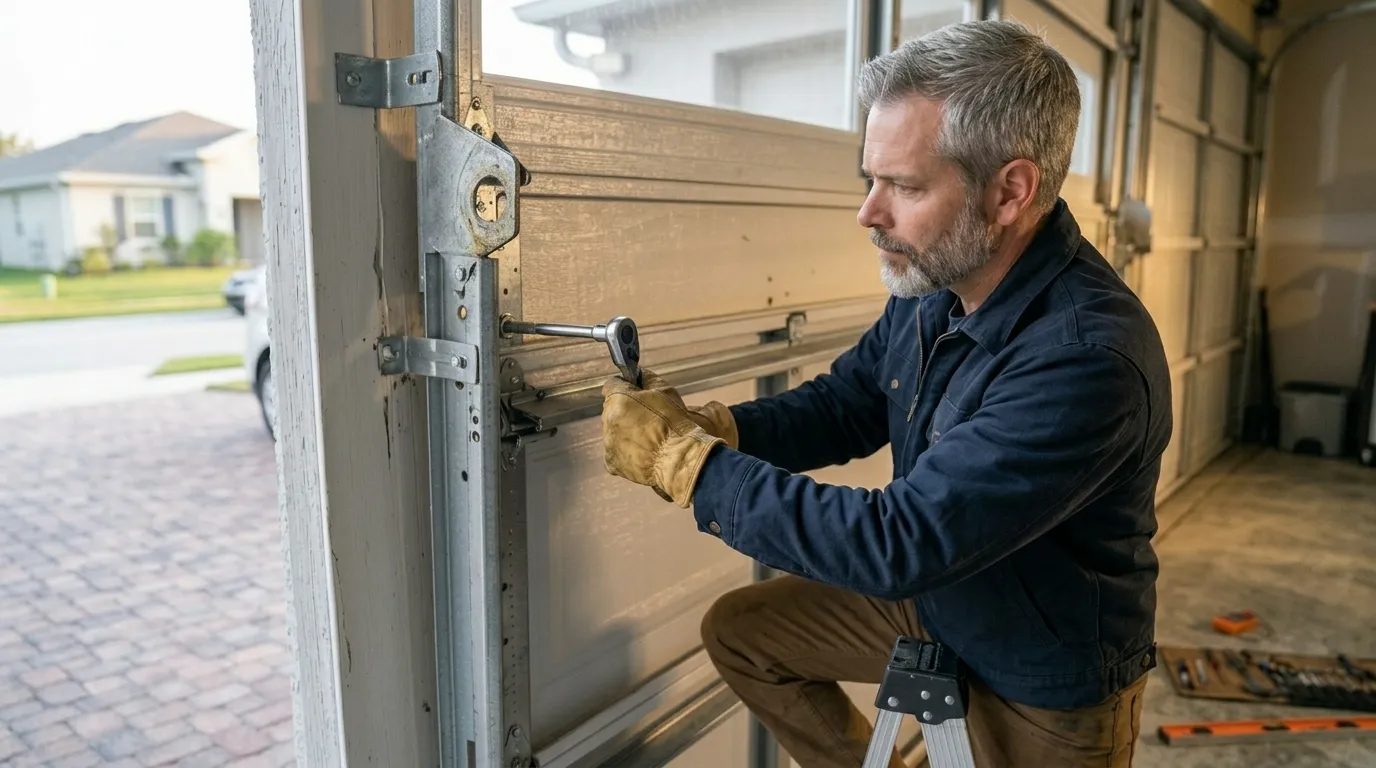
A door installed when the house was built in the early 1950s was almost certainly set up with a single torsion spring on a bracket sized for a lighter, thinner panel than what's often on the door now if it's ever been swapped for an insulated replacement. Add a spring that's original, or close to it, and you've got a common failure pattern here: an opener straining and grinding because it's fighting a spring that's lost half its lift, not because the opener itself is bad.
Cold-climate stress adds a second layer. Steel contracts, lubricant thickens, and a track that was slightly out of plumb in July can bind hard in January. On houses this age, the track is also often the original gauge, lighter than what goes in today, so a hard bind can bend it rather than just stick it.
We try to fix the spring or track problem in front of us rather than sell a full opener swap when the opener isn't actually the failure. Sometimes replacement is the right call - a cracked panel or a drum-style extension setup that's outlived its parts - but we say so plainly rather than defaulting to the bigger job.
This Area's Housing
Dumont has about 6,491 households, and the median house here dates to around 1952 - a good seven years earlier than the 1959 median that holds across the wider area we cover, and solidly inside the 1938 to 1996 build window we see across the 152 named communities we work in. That earlier median matters: a garage built in 1952 has had a decade more time for original hardware to wear, and a decade more chance that whoever repaired it since used whatever parts were on hand rather than a matched replacement.
Median household income in Dumont runs around $125,585, close to the $126,078 median across the broader service area. That's relevant mostly for one reason: at that income level, most of the repair-versus-replace calls we get are genuine judgment calls, not forced by budget. People here can usually afford to fix a door properly, which means the conversation is about whether it's worth fixing at all, not about cutting corners to make it cheap.
Across the region, pre-1960 construction is still the norm rather than the exception, and Dumont's numbers put it right in that pattern.
What Happens When You Call
-
1
Call or Request a Quote
Tell us what the door is doing and roughly how old the house is - that alone points us toward the likely part before a truck leaves.
-
2
On-Site Diagnosis
A tech checks the spring, cables, tracks, and opener in person and tells you plainly what is actually wrong.
-
3
Straight Price, No Surprises
You get a number before any work starts. It covers parts and labor, nothing added after the fact.
-
4
Fixed the Same Visit
Most repairs are done in one trip. If a part needs sourcing, we tell you that upfront instead of guessing.
Recent Work Near Dumont
Frequently Asked Questions
Do you have a location in Dumont?
No. We run out of Wayne, about 15 miles from Dumont, and dispatch trucks out to jobs rather than keeping a shop in the borough. It doesn't change the repair, but it's worth knowing up front rather than assuming there's a local branch.
Why does my spring keep failing when the house is only from the 1950s?
A torsion spring rated for the original panel weight often struggles once a heavier insulated door goes in, or simply reaches the end of its cycle life after decades of use. Houses built around 1952, which is typical for Dumont, are old enough that most springs are on borrowed time even without a heavier door added.
Does the cold really affect the door that much?
Yes. This area sits in a severe cold-winter climate band, and steel track and springs behave differently once temperatures drop hard. A door that's slightly out of adjustment in warm months often jams or drops unevenly in January because the tolerances tighten up.
Get Your Door Fixed in Dumont
Call now for same-area service.